While many nutrition experts claim that a diet plan should come naturally without special monitoring, I have to disagree. Especially if you have a history of consuming unhealthy food for years and, like me, are obese. In the case of following the Keto Diet protocol, as we are, monitoring becomes even more crucial.
That’s why the next three posts will focus on the topic, “Monitoring Our Weight Plan.”
How can you tell if you’re on the right track to achieving the benefits of the Ketogenic Diet?
The answer is: When you spend most of your time in nutritional ketosis. This metabolic state is quite fragile, especially in the early stages, which is why monitoring is crucial.
What is Nutritional Ketosis? This metabolic state happens when carbohydrate intake is sufficiently low, prompting the liver to convert fats into ketones, which are then used as a source of energy.
Given that definition, the goal of measuring is to determine whether we are in nutritional ketosis and to what extent.
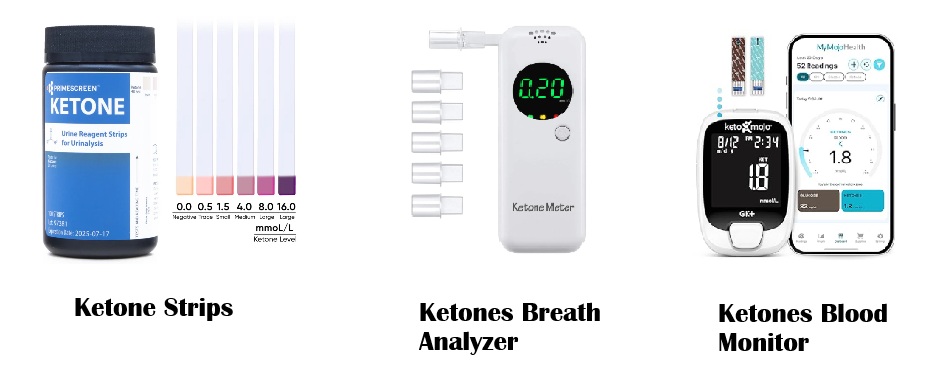
The three most important methods for measuring our ketones are:
Urine Ketone Strips: A cheap and easy way to check ketones, though less reliable, involves using urine test strips. You simply urinate on the strip, ensuring the test area comes into contact with your urine stream. Afterward, wait a few seconds and compare the strip’s color with a chart to determine the results. The issue with this method is that it measures ketones being excreted. While this works early on when your body isn’t using ketones heavily, the results may become less accurate as you start using more ketones as fuel.
Ketone Breath Analyzers: If you’re familiar with the Alcohol Meter used by the police, then you already understand the science behind this Keto monitoring tool. It’s a more accurate method compared to “Keto Urine Strips” and is the least invasive of the three methods. However, the results can be influenced by a recent meal or your hydration level. To use the monitor, simply breathe into the mouthpiece, and it provides a result based on the acetone level (a byproduct of Keto) in your breath.
Ketone Blood Meters: Think of this device as similar to a standard glucose meter, but instead of glucose-detecting strips, it uses ones designed to measure ketone bodies. This is widely considered the gold standard for keto measurement. A good device often doubles as a ketone and glucose monitor, and some even combine the two readings to calculate an index of ketone effectiveness. While a blood reader is typically less expensive than a quality breath analyzer, the cost of strips can add up to the solution cost over time.
My final recommendation for a measurement method is to skip the urine strips and opt directly for the blood meter or the breath analyzer.
In my next post, I’ll share the results you can get with the Keto Mojo Reader.
Until the next time! 🙂
 THE HETA BLOG