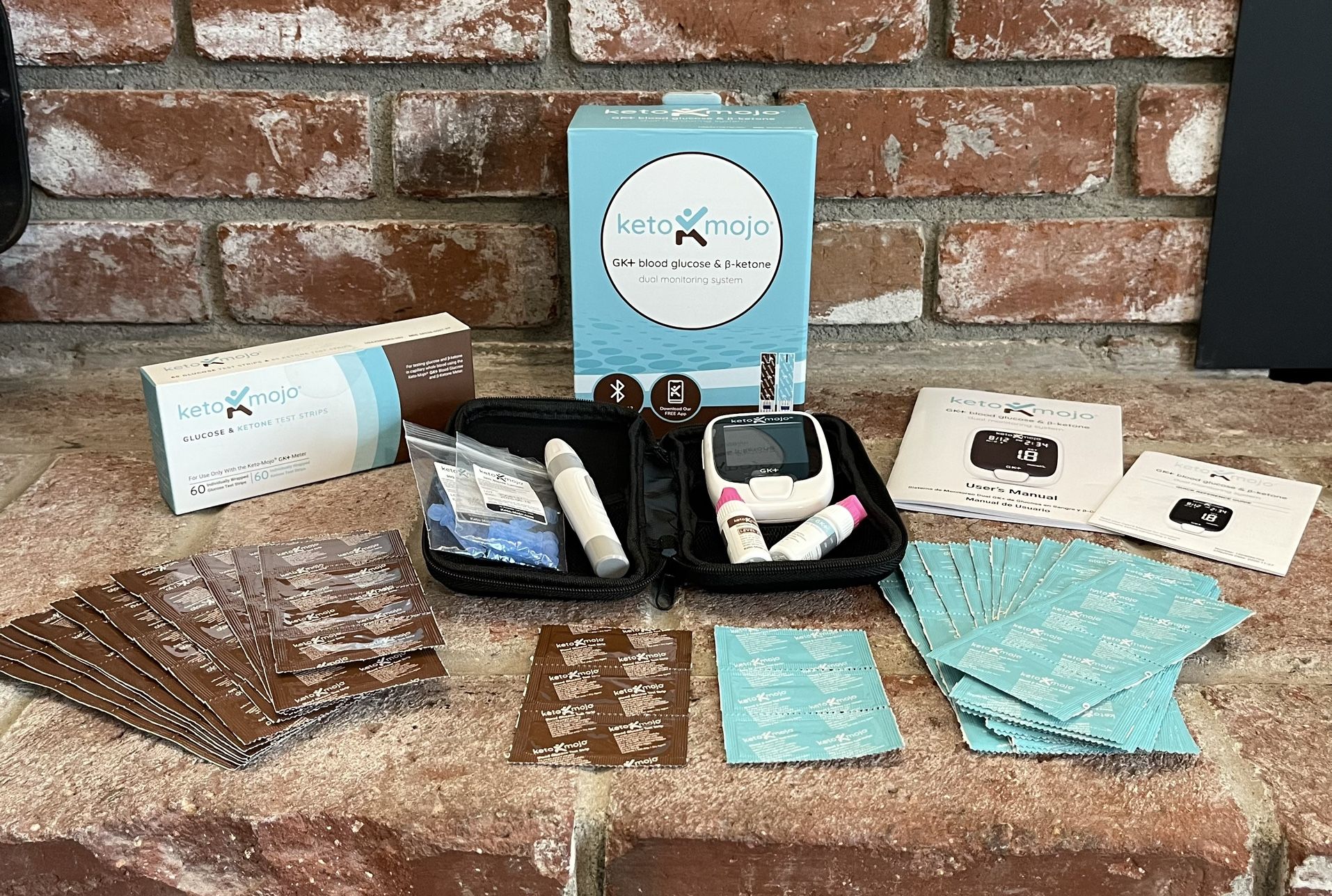
Yes, this post builds on the previous one, and while this type of monitoring might not be useful for other weight loss programs, we can’t deny that when following “Keto,” keeping track of our level of “Ketosis” is crucial.
I went with the “Keto Mojo Blood Monitor,” and as I mentioned earlier, it functions just like a standard glucose monitor. Simply load the device with the blue ketone reader strip, prick your finger, collect a small drop of blood on the tip of the strip, and wait for the results.
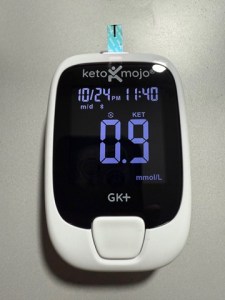
This was my result for last Friday.
If your level is below 0.5, it means you’re not in “Nutritional Ketosis.” If that’s the case, don’t worry; just stick to the protocol. Get your carbs only from the list of approved vegetables, include your protein, and focus on consuming plenty of healthy fats.
Another thing to keep in mind is that the Keto Mojo comes with blood glucose strips, and when you measure both glucose and ketones, the device can provide a reading called the GKI. This index is gaining recognition as a more valuable metric to monitor since it factors in your blood glucose levels.
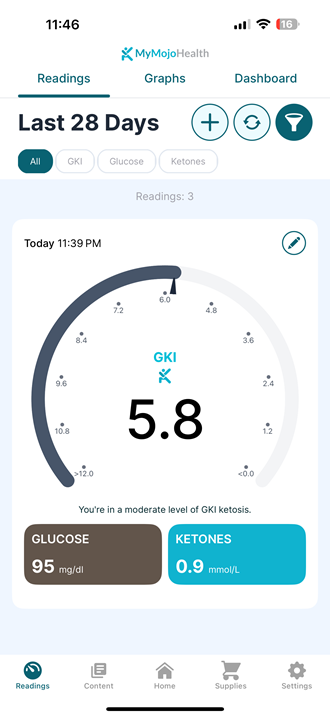
How often should you measure? Don’t do it too often, twice a week or even once a week is enough. Another good time to measure is if you think you’ve eaten something that might have knocked you out of ketosis. But remember, if you stick to the protocol, you’ll soon notice other signs of being in ketosis, with the lack of hunger being the easiest to recognize.
On our next post, we will continue with other steps in weight monitoring.
See you there!
 THE HETA BLOG