Doing some cleaning to avoid temptations

foodcloset

Let’s be real! It’s already hard enough to stay focused on the street with all the unhealthy food ads that have no place in our diet. We need to make sure our own home isn’t a spot where we sabotage our eating plan. So, here’s my tip for today…

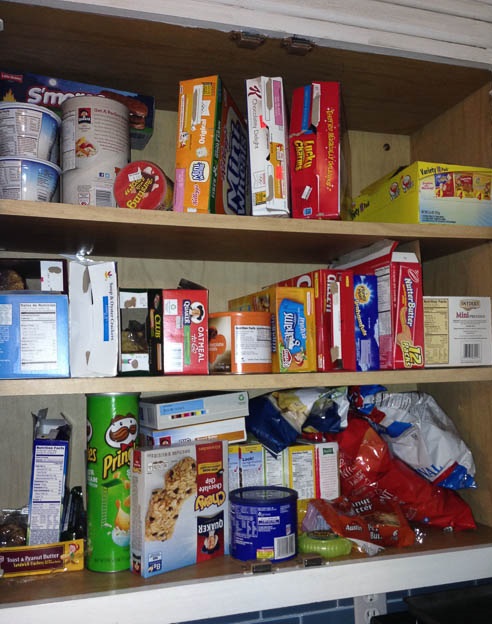
Clean out your food closet! While this isn’t my own pantry, I’m sure many people have something similar. The truth is, no matter what weight loss plan you choose, most of the items shown here are definite no-no options.

By now, you probably have a sense of what the problem is. Coming home shouldn’t feel like another test of willpower. It should be a place where you feel safe, relaxed, and surrounded by food that supports your health goals instead of undermining them.

Do I want you to throw things away? Absolutely. Don’t fall into the trap of thinking you’re wasting money. If you catch yourself feeling “What a waste” while decluttering, simply don’t feel guilty. You’re doing something important to stay on track. So go ahead! CLEAN OUT THAT FOOD CLOSET!

I will see you on our next post.    🙂

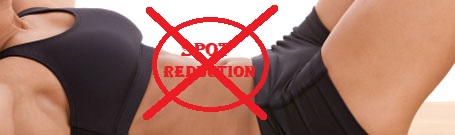
Spot Reduction? No, there is no such thing!

spotreduction

You might not be familiar with the term “spot reduction,” but I’m sure plenty of people still believe it’s possible, even today. Maybe even you!

Spot reduction is a fitness myth claiming that exercising a specific area can reduce fat in just that part of the body. For example, if someone has belly fat, they might believe doing lots of crunches will target and burn fat in that area. This idea was hugely popular in the fitness industry during the 80s, so much so that many industry icons, built part of their fame by promoting the spot reduction myth.

tonylittle

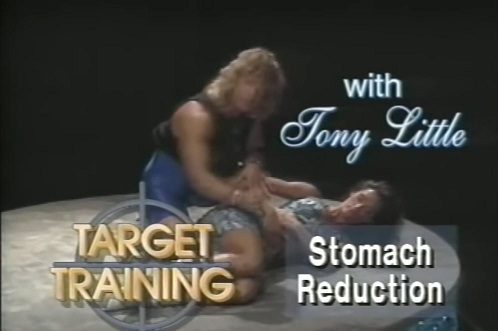
Tony Little, remember him? The fitness celebrity who called himself “America’s Best Trainer” was famous for promoting spot reduction workouts. His program, “Target Training,” was a massive hit. I even had the tapes. What can I say… back in the 80s, the theory seemed perfectly logical.

You’re probably wondering two things: First, if spot reduction is a myth, why are crunches still recommended? And second, if spot reduction isn’t real, then how do you actually lose fat?

To answer the first and part of the second question, crunches are still a great exercise for building strong abs. If your goal is to have washboard abs in the future, you’ll need to strengthen your abdominal muscles and reduce body fat, so those muscles become visible. That’s why crunches remain a solid choice. Just remember, there’s a right and wrong way to do them, so be sure to research proper form to avoid injury.

For our second question, fat is reduced evenly across the body through a combination of exercise, a proper diet, and adequate rest. As simple and amazing as it may sound, that’s the winning formula. Here at TheHetaBlog, we’ll be talking about this a lot.

Now, please, pay attention (especially if you are very fat or obese):
DO NOT, let me say that again,
DO NOT START A HEAVY WORKOUT TRAINING WITHOUT MEDICAL SUPERVISION. This is your life we are talking about.  Do the right thing and check your condition first and choose your training later.  If you are too out of shape, probably it will be something simple like walking, but let’s someone who understand the condition of your body do the call.

So, there you have it! You can’t lose fat in just one spot, just like you can’t lower the water level from only one corner of a pool by scooping water out there. The water level will drop across the whole pool, just like fat loss happens throughout your entire body.

Now that you know, the next time that you see someone talking about “spot reduction” or just saying something like “I got these exercises that will take away the fat from insert spot here“, do that person a favor and teach him.

Or better yet… Say to look for the answer here at     http://www.thehetablog.com        🙂

Meet the enemy of every weight loss plan! Don’t be deceived by its sweetness

Every weight loss plan is built on its own set of rules and knowledge. Mine is no different, and I believe the Ketogenic Diet has shown enough evidence to prove it’s a solid step toward overcoming insulin resistance. As mentioned in our last post, insulin resistance is something we need to avoid at all costs, as it opens the door to many health problems.

Maybe you’re not following Keto and have your own plan that you trust will bring results. That’s totally fine! Here’s a bit of advice that can apply to any diet if you’re overweight or obese like I am.

CUT DOWN ON THE SUGARS!!!

Sugar is in almost everything we eat, and even if you don’t see “sugar” listed in the ingredients, it’s often hiding under other names like high-fructose corn syrup (HFCS), dextrose, sucrose, fructose, lactose, and more.

Now, don’t get me wrong. It’s not that our bodies can’t handle a normal amount of sugar; it’s actually a primary source of energy. But you likely consume more sugar than you need, and certainly more often than necessary.

Another thing to consider is the type of sugar. I mentioned high-fructose corn syrup (HFCS), and you’ll be doing yourself a big favor by avoiding it like the plague. Instead, get your daily dose from whole fruit (not juice), which comes with fiber to help prevent the glucose spikes we often get from liquid sugars like juices.

Try this experiment: write down everything you eat in a day, including snacks, and then use an app like “My Fitness Pal” to find out how many carbs, or what will be converted to sugar (glucose), you’re consuming. To do this, take the carbs value of each food, subtract the fiber, and you’ll get the Net Carbs. Then, add them up for your total for the day.

Let’s do an example:
A regular Peanut Butter Sandwich and a can of Coke.

Two slices of white bread:  25.3g – 1.2g = 24.1g
Two spoons of peanut butter = 7g
One can of Coca Cola = 39g

Our little snack means 70g of Carbs

This is about the maximum for any low-carb diet and roughly a third of a diet that doesn’t limit carb intake. My suggestion for this test? Skip the Coke and swap the white bread for a high-fiber option like German pumpernickel.

If you get into the habit of reading labels, you might realize you’re consuming more sugar than you think. Too much sugar can quickly lead to insulin resistance and, if left unchecked, type 2 diabetes. So, let’s get into minding the amount of carbs that we get into our body, as it is quite possible that you are having more than you need.

See you on our next post.

Coca-Cola (Diet) and other Bad Habits

teaorcoke
I am sorry…
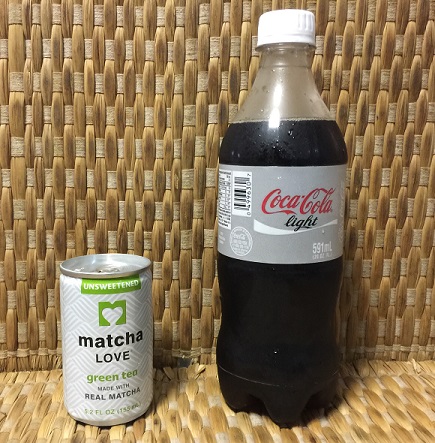
This post was supposed to start with a typical “XX years as a Coca Cola Drinker, and I am an addict”.  But to be honest, I really can’t remember for how long the product known as Coca-Cola Diet/Light/No Sugar had been such a “close friend” of mine. A good guess would be around 35 years.

The thing is, no matter how long you had it, you can get rid of bad habits. And while it’s not always easy, it’s doable.

Let me give you some information to ease the process.

I will stop 35 years of “Diet Cola Drinking Habit” and hopefully it will serve you as an example for your own fight. So, choose a bad habit and work along with me. If possible, choose a habit that is holding you back on our current goal. Maybe you are addicted to certain food at a specific time (like while watching TV) or maybe you fall into your bad habit when you are in a certain mood. It doesn’t matter the habit; these rules apply to all of them.

So, for starters what is a bad habit?  To put it simple, a bad habit is a negative behavior pattern. And according to MIT research, a bad habit follows a loop of three main components:   CUE, ROUTINE, REWARD.  If you are able to disrupt this loop long enough, you will be able to break the habit. There is a saying that a bad habit takes 21 days to be changed. It really will take a little more than that, especially if we are talking about years of doing what we want to stop doing.

The first thing that we want, is to concentrate on the ROUTINE. Try to isolate the bad habit while doing the action. A good way of doing this, is Imaging that you are someone else looking at you while we are doing our sinful act. In my case, I will think about someone following me everywhere and watching when I drink a Diet Coke, that someone will be shocked how often I do it and he (me) will pay close attention to details before and after the negative behavior. In summary, we will understand better the action of the habit that we want to change, and we will give it a correct label (Overeating, smoking, Fast Food eating).


Next let’s work with the REWARD system.
This is the hard part of the deal. You must make sure that you can create rewards that can replace the ones that you receive from the bad behavior. Let say that you want something sweet, but it doesn’t need to be Chocolate Cake, right?  Why not trying an Apple and complementing your good deed with some positive thinking. Think that you are closer to your weight goal because of this small step. In my case, I will replace the Cola drink with Green Tea (and the positive thinking is needed too LOL). This is in my opinion, a very easy approach because I am not changing anything about the process, just the element that I will be drinking in excess. It turns out that drinking a lot of green tea is GREAT for your health. However, because this part is not always easy, prepare for lots of trial error until you find the right GOOD reward for changing or killing your bad habit. Always aim for positive or healthy rewards, replacing one bad habit with another bad habit is not good for anyone.


Finally, we deal with the CUE.
You may not realize it yet, but your bad habit is not coming to you out of the blue, there is something that tells you to start rolling. A signal, a trigger, a CUE. And it could be as simple as being in a place or talking to someone or doing something specific that leads to the problematic behavior. Identifying our CUE is a must if you want to stop the habit. For now, instead of trying to fight the bad habit, pay close attention to the moment before you engage in the action:

Where am I when I do it?  Is the place important?
How am I feeling?  Happy? Sad? Bore?
Who am I with?  Alone? Friends?  Significant other?
How is my health?  Strong? Weak? Those days of the month (in case of girls)?
Write down anything that you think could somehow take you to the bad behavior. And be ready for the next time that the “Cue” repeats.

After knowing my cues, I can take action.  Let’s say that most of the time that I drink Diet-Coke, I am either bored or Watching TV. Well, the next time that you are in that state, be aware that it is an opportunity for change. Be alert and ready to identify the moment that you are getting the urge to engage into your bad habit.  At that time, interrupt your pattern with something else. If must be something that take you out of cue (pun intended).

Example: you are watching a movie on Netflix and you get a strong desire for Chocolate Cake. You decide to go to the kitchen and… Call your Mom to check how she is doing. Talk to her for a few minutes, tell her that you love her and make her feel special. By the time you hang up the phone, I feel confident that you will be happy and proud (Reward) and you won’t be thinking about chocolate cake. Good! go back and finish your movie. At the end of the movie, pad yourself on the back because you just avoided giving-in into your bad habit. You did GOOD!


A good strategy for CONSISTENCY

Ok, we kind of know what to do. Now how long do we keep doing it?  Until it WORKS! We are going to be using the Seinfeld Method (yes, the comedian Jerry Seinfeld). If you don’t know what I am talking about, let me just tell you that there is a good story about Jerry Seinfeld teaching his method to a new comedian during a Q&A session. Work on your skill (jokes) and mark every day that you do it on a big calendar. If you miss one day (break the streak) you must start all over. And believe me, after repeating that “starting over” a few times, you will be caring about your Seinfeld-Method-Streak. I am adding an ending point of 21 days to the cycle (for reward and accountability purposes).  So, you will be doing this cycle over and over again (21 days at a time) until you break your bad habit. Ah, and don’t forget to give yourself a big reward after finishing each 21 days cycle.

If you want to know why I am giving away Diet Coke, I promise to tell you, but in another post. 


Now go ahead, pick your habit and get ready to break it!!
And the Winner Diet is…

After much research and reflection, I’ve come to a strong conclusion: for individuals struggling with obesity, the most effective dietary strategy is a Low-Carbohydrate Diet.
Here’s why:

If you’re obese, it’s highly likely that you’re dealing with some level of insulin resistance, a condition where your cells don’t respond well to insulin, forcing your pancreas to produce more of it just to keep blood sugar in check. This chronic overproduction can lead to a cascade of metabolic issues.

The key to reversing this is to restore insulin sensitivity in other words, getting your body back to a state where insulin works efficiently again. To do that, you need to avoid frequent insulin spikes, and that means reducing your intake of carbohydrates, the food group that triggers the strongest insulin response.

My personal recommendation? The Ketogenic Diet.

Keto is not just popular; it’s backed by a strong track record of results. It works by shifting your body’s fuel source from glucose to ketone bodies, which naturally stabilizes blood sugar and reduces insulin demand.
To accelerate progress, I also will incorporate Intermittent Fasting (IF). This powerful tool helps lower insulin levels even further and speeds up the journey toward metabolic health.

In my next post, I’ll dive deeper into Keto and Ketosis. I will tell you what they are, how they work, and what you need to get started. See you on the next post! 🙂

Profiling (The Before)

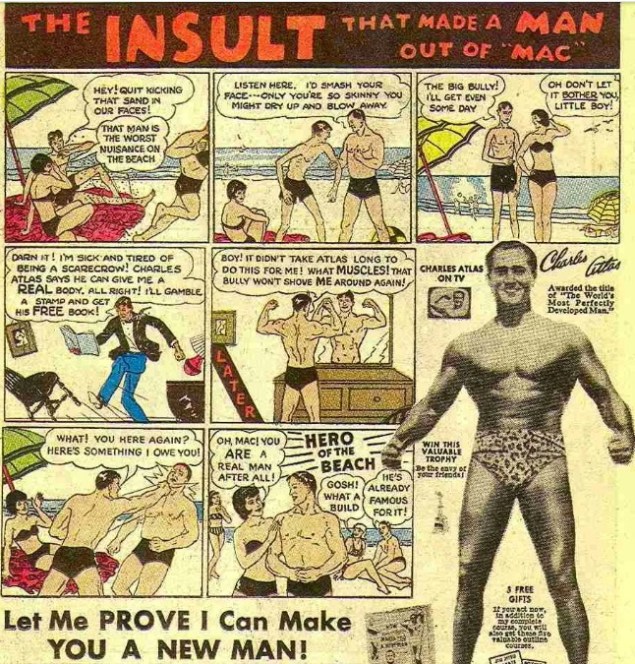
Depending on your age, you might recognize this classic reference, or it might be new to you. In the golden age of comic books, there was always an ad featuring Charles Atlas, promising to transform you into a powerhouse of strength using his “Dynamic Tension” method.

Now, whether or not you’ve seen that ad, the concept behind it is universally familiar: the journey from an undesired state to a better one, backed of course, by visible proof of progress. I like to call this
“The Before and After.”

The “Before”

This is where change begins, with a decision and a record. That record should reflect the kind of transformation you’re aiming for. Often, a simple photo will do the trick, but it can be anything else that captures your starting point and later, when you reach your “After”, becomes a reminder of how far you’ve come. 

The “After”

This is your destination, your goal. It can be short-term or long-term, but it must be realistic and achievable. So, please, let’s skip the fantasy of dropping 20 pounds in a month. Instead, commit to something sustainable and make it meaningful.

My Profile (Before)

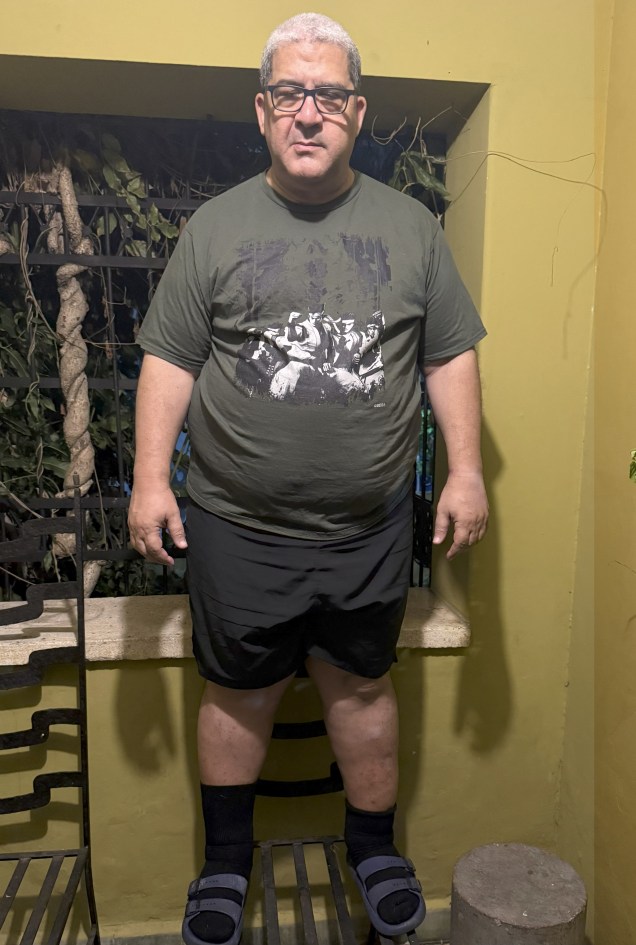
Since this post is about Profiling (The Before), let me give you an idea, here’s my own starting profile. It includes both data and a photo, and I encourage you to do the same. Profiling will help you track progress and stay motivated.

And remember, your profile will differ in data depending on your goal, if what you want is to change your blood sugar levels, instead of a picture you would have a recent blood test as your “Before”. 

Now let’s see…

This is my beginning profile:

Name:  Miguel Andujar (Heta Akira)
Age:  61
Gender:  M
Height:  5′ 9″
Weight: 319 lbs
Fat %: 44.1
Waistline:  55″ 


Note:  The T-Shirt is XL2!!!

Ok, now commit and go make your own “BEFORE”!  

No matter the plan, get your doctor’s “Blessing”

bpbeingtaken

Let us imagine that you already arranged a good plan for eating healthy and also will add a few hours of light exercise during the week.  Great!!!
A fair question would be:
Why, do I need to visit my doctor if he or she would 100% approve what I am planning to do?

The answer (totally in your favor) is: Because a medical checkup can get you essential information that you should consider during your weight loss program.

Let’s say that you go to the doctor and tests reveal that your blood sugar is too high. Of course, your doctor won’t tell you to drop your plan but maybe add medical suggestions that could improve how efective and safe it executes. Maybe you will get a note to keep away for certain foods or monitor your glucose levels. The same goes for blood pressure and other parameters that have a profound impact on your health.

A couple of years ago, I went to the doctor for a case of torticollis and some of the tests revealed a condition in the cervical area of my spinal cord (neck area) that requires attention. Luckily enough, the doctor said that “Cervical Therapy” would suffice. But my point is that because of this finding, the doctor strongly suggested keeping away from high impact exercises, even if I could go back to a normal weight.  This was not a preventive checkup, and I got very important for any fitness plan that includes exercise. So, knowing where you stand before initiating is always a wise decision.

Work with your doctor and try to get a health picture of you as wide as possible. The more information the better. I believe that your “Before” checkup should include but not limited to: 

1) Complete “Lipids Profile” (your Cholesterol numbers).  Please tell your doctor to include the not always present, genetic marker Apo (a) and the modernly used risk indicator Apo B.  
2)  Glucose Tests (your blood sugar numbers).  This is usually measuring your glucose level at the time of the test, but how about asking for an “A1C” test that is a better assessment for glucose healthy levels? and while you are at it, let us get a “Fasting Insulin” Test.  I am sure that your doctor won’t complain getting this additional knowledge. 
3) Liver Test is also mandatory when assessing metabolic health. If you are obese like me or even overweigh, there is the possibility of having some degree of NAFLD (Non-Alcoholic Fatty Liver Disease) aka Fat in your Liver. 

So go ahead! Get your doctor involved and start your journey knowing important things about your current self and that you have the approval of your medical professional for your journey to a healthier You!

When will the blog be UPDATED?

THBupdates

Starting next week, our Blog will be updated twice a week. There will be weeks that a third post could appear but that won’t be very often.

Of course, what better way to start than with “Monday” as the first day for posting. If there are sad news, I will leave them for the second post day, because on Monday, we need support, drive, and everything else that help us start our week with energy.

Thursday is the best candidate for the second post. This is aiming at an even split week: Monday+ 2Days + Thursday + 3Days.

Well, now that we know, mark your calendars and LET’S KEEP POSTING!

Body Fat with a Weight Scale

In the last post we decided that to monitor our progress we will concentrate on Fat.
And while we also said that BMI (Body Mass Index) could be a way to measure, I don’t think that BMI should be the method of choice nowadays.  BMI is good when you don’t have a smart scale around and you are not very muscular. 

If you want my opinion, I would skip BMI altogether and go right into BFP (Body Fat Percentage) as for us in this Blog, fat is the name of the game.

So, let us focus in getting a good Weight Scale (Smart Weight Scale). One that can compute Body Fat Percentage for us.

A Smart Weight Scale is not too different in appearance to any digital scale that only compute weight. Of course, after getting the results, the similarity ends. 

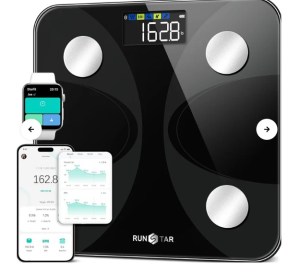
Here is a photo of the one that I am using now.  I believe it was like 25 dollars at Amazon. So is not like getting a proper device will break the bank for you. 

Now, in any modern digital weight scale, you will expect at least the following:
1) More than just Weight and BMI, again we won’t settle for less than a weight scale with Body Fat readings. Some scales can even split Fat in subcutaneous (under the skin) and the visceral fat (around the organs). In case you are wondering, having excess of visceral fat is worst. 
2) Phone (and sometimes smartwatch) App to track your data. You will pair your scale with your phone and every time you step into your scale, your data will be transferred automatically. 
3) Profiles is a desired feature if the weight scale is shared and there are other family members following your new healthy trend of tracking your weight and fat percentage. 

As I am not recommending any brand or model of weight scale, go online and see a couple of showdown videos to help your selection. Use a prompt like “Best Smart Scales of 2025” or something similar and start reviewing! 

Maybe some of you are asking yourself, what is the deal with this BFP?  I already got a good scale that measures weigh and BMI, why should I change to BFP?  After all most of doctors still rely on BMI on patients’ assessments. 

Yes, that is true. There are a lot of physicians that still use BMI for weight diagnostic, but this number is going down each year. Specially, after 2023 that the American Medical Association (AMA) redefined the limitations of BMI as a sole indicator for assessing weight and obesity risks. 

Ok, now to close this post, I will give you a practical example that will let you see why “BFP > BMI”.  

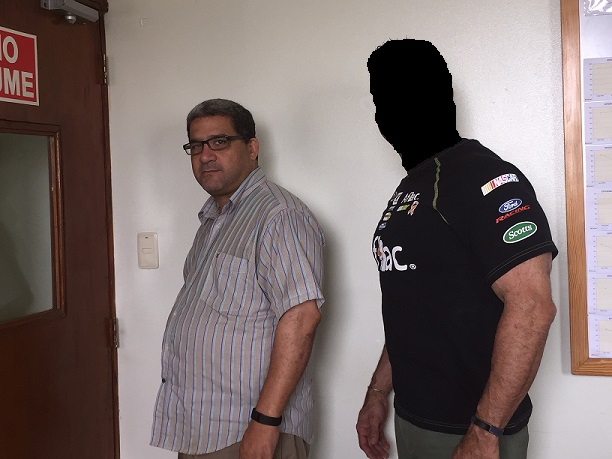
Here I got a photo (very old photo) that we will use to show our point. 
Look at the two subjects in the photo.

comparing

Although the one on the right is 4″ taller than me, consider the following data:

AGE:              53   –     52
WEIGHT:       274   – 229
HEIGHT:       5′ 9″   – 6′ 1″
BODY FAT:    49.6  –   19
WAISTLINE:  52”  –    34″
PANTS SIZE:  42  –    34″

BMI values =   40.5 – 30.2     to BMI, BOTH SUBJECTS ARE OBESE!!!


BUT if we go the BFP route, we see that in my case, half of my body is fat and in the subject of the right is less than 20% and that is why these two are so different at plain sight. 

Again, remember that the reason for this lack of precision on BMI is because it disregards entirely muscle mass. 

So let us get a good Smart Weight Scale that calculates BFP!

Just how fat are we?

If someone asks you this question: How Fat are you?  What would be your answer?
I am a few pounds overweight or slightly over my average weight or you dodge the question entirely and you answer with “I will start a diet next week”?

There is a problem giving sidestep replies like those above. They are all related to a value that is unknown and unclassified, except for the last one that is not even an answer. Now, here at THB (The Heta Blog) we will user something that works for everybody and I am not talking just about pounds. 

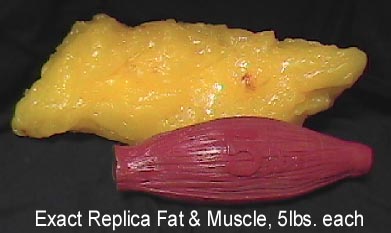
The thing is, when you see an overweight or obese person, what you are looking at is Fat or Excess Fat to be more specific. If you don’t understand, let me show you something

fat-v-muscle

Here you see five pounds of Fat and Muscle. Maybe by just looking at this picture you understand my point. Fat takes a lot more space than Muscle. That’s why sometimes you can see two men with the same weight but with distinct size of clothes.

Again, the important indicator for us to measure our fitness level is going to be BFP (Body Fat Percentage). In other words, how much of our body is fat.

Now the Big Question… How do we measure our BFP?

To measure BFP we have the following options:

1) DEXA Scan: A big machine that uses small emissions of X-ray to give us our body composition. This is the most accurate method but is also the most expensive. A session to determine your BFP would cost around $300.

2) Hydrostatic Weighing: In this method you are submerged into a water tank and the machine will measure your body fat. The logic behind this method is that being bone and muscle denser than water, a body with substantial amounts of body fat will be lighter. Hydrostatic Weighing is accurate and not so expensive as Dexa Scan but is not as available.

3) Skin Fold Caliper: This is a very popular method in gyms but since the device is not expensive you can get your own. Results are as accurate as your measuring skills. The idea is to pinch the skin at certain spots and measure with the tool. After that you will check the values with a conversion table that will give you the resulting BFP.

4) Bioelectric Impedance Analysis: This is the method used by many Weight Scales. Using a small electric current flow and measuring the electrical impedance (resistance) on the body you can get a relatively accurate value of your BFP.

 5) BMI (Body Mass Index): Well, this is not really a true method to measure BF, but in overweight and obese people it can sometimes be as accurate as the Bioelectric Impedance Analysis. The parameters needed for the formula are Height and Weight. Strangely enough, BMI is still the number one method for assessing body composition and there are scales that only have BMI.

Out of all five methods, we will be using 4 and 5.

Now, to end today’s post, let’s get our BMI right now!
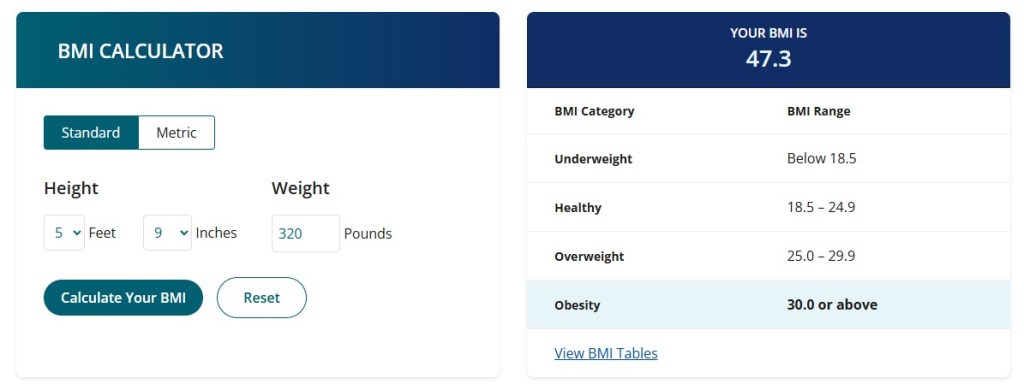
I know that my current weight is 320 pounds and that I am 5′ 9″.

For our test, we will use a BMI calculator from The US Department of Health & Human Services 

https://www.nhlbi.nih.gov/calculate-your-bmi

I went to the site, and using “Standard” System, I entered height and weight and clicked on “Calculate Your BMI”.

Well, there you have it folks! According to the resulting table, having a BMI above 30 will place you in the obese category. In my case, with a BMI of 47.3 that is way over plain obese. So just doing the effort to get out of this category will be a big task for me.

On our next post, we will learn how to use a Bioelectric Impedance Analysis Weight Scale and compare results.

See you in the next Post!    🙂