Monitoring Our Weight Loss Plan – PART III

MonitorLevels

Alright, everyone, we’ve reached the final part of our three-post series, “Monitoring Our Weight Loss Plan,” and I’m confident that you’ll be somewhat familiar with the following monitoring options.

Let me start by saying that I find surprising how many personal trainers overlook the importance of tracking short-term progress. As someone who is obese, I understand the strong desire for results and how a small boost at the end of the first week can make all the difference between sticking with the program or giving up.

To understand and track short-term results effectively, close monitoring is essential. With that in mind, here are the three levels of monitoring I recommend:

LEVEL 1: This is the most basic level, assuming you already have a digital scale that measures weight and fat percentage (as recommended in previous posts). Simply step on your scale, record the readings along with the date in a notebook. The best time to do this is in the morning, right after waking up.

In summary:

  1. Wake up Monday (try to start at the beginning of a week) and take your weight and fat % readings and jot them down on a notebook or even a piece of paper.
  2. The next Monday morning, take again your weight and fat % and compare them to your last Monday readings.  CELEBRATE YOUR RESULTS!!

Note:  Remember than 1-2 pounds is perfectly normal as a weight loss rate.

LEVEL 2:  The second level of monitoring involves doing Level 1 plus using software that acts as a fitness diary. Level 2 requires discipline to fully utilize the software, as it often involves logging meals, measurements, and workout sessions. The reward is the wealth of information you gain, such as macro percentages, calorie data, reports, and graphs. I recommend the excellent “My Fitness Pal,” which boasts the largest meal database, extensive output information, and availability on all platforms. Checking out a few reviews, such as on YouTube, is always a good idea to understand the product and how to use it effectively.

LEVEL 3:  Level 3 monitoring is the highest level of commitment, combining the previous two levels with using a Smart Watch or Fitness Band to track personal fitness data. For example, if your daily goal is walking 10,000 steps (a goal that could merit its own discussion), these devices let you know whether you’ve hit your target and, if not, how much you fell short.

Keep in mind, Level 3 encompasses the earlier levels as well, so simply owning an Apple Watch or Fitbit doesn’t mean someone is fully committed to the regimen. For us, Level 3 signifies genuine dedication and consistency. The best part is that these devices can sync with MyFitnessPal, automatically transferring all your recorded steps to the workout section—a super convenient feature.

When it comes to choosing a device, it really depends on what you’re looking to get out of it. Do I need a $400 Apple Watch just to track my daily steps? Of course not! But I’m not ruling out the idea that you might want a device with a range of features, allowing you to explore and grow by using them one step at a time.

At the time of writing this, I recommend the following:

Fitness Bands (less expensive basic devices)

Xiaomi Smartband 9     4/5
Fitbit Inspire 3   3/5
Samsung Galaxy Fit 3   5/5

SmartWatchs (Full fledge advanced monitoring devices)

Samsung Galaxy Ultra (2025)     5/5
Apple Watch Series 11   5/5

AAs always, it’s your choice how to stay on top of your progress, make the decision and start following through. You can begin with Level 1, then move to Level 2 and stick with it until you’re comfortable, and only then advance to Level 3. Or, if you feel Level 1 is sufficient, that’s an option too. Just don’t overlook these powerful tools that can significantly boost the chances of your plan’s success.

Goodbye and good monitoring!

Monitoring Our Weight Loss Plan – PART II

Yes, this post builds on the previous one, and while this type of monitoring might not be useful for other weight loss programs, we can’t deny that when following “Keto,” keeping track of our level of “Ketosis” is crucial.

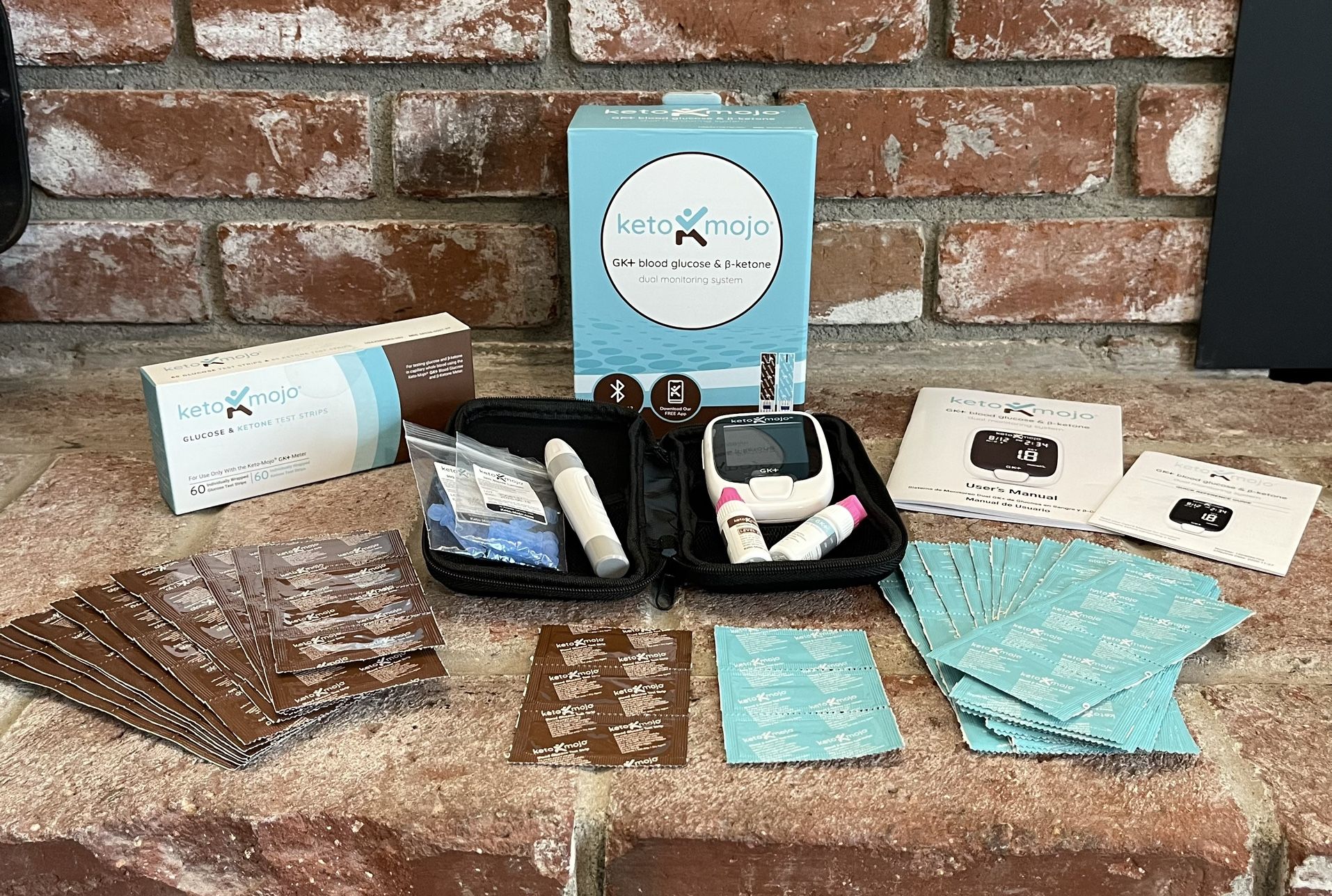
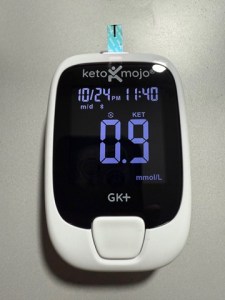
I went with the “Keto Mojo Blood Monitor,” and as I mentioned earlier, it functions just like a standard glucose monitor. Simply load the device with the blue ketone reader strip, prick your finger, collect a small drop of blood on the tip of the strip, and wait for the results.

This was my result for last Friday. 

If your level is below 0.5, it means you’re not in “Nutritional Ketosis.” If that’s the case, don’t worry; just stick to the protocol. Get your carbs only from the list of approved vegetables, include your protein, and focus on consuming plenty of healthy fats.

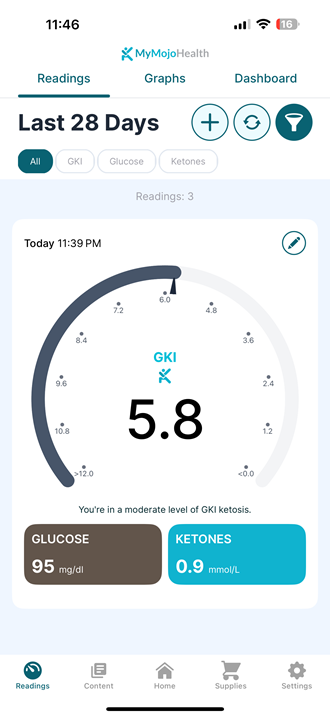
Another thing to keep in mind is that the Keto Mojo comes with blood glucose strips, and when you measure both glucose and ketones, the device can provide a reading called the GKI. This index is gaining recognition as a more valuable metric to monitor since it factors in your blood glucose levels.

How often should you measure? Don’t do it too often, twice a week or even once a week is enough. Another good time to measure is if you think you’ve eaten something that might have knocked you out of ketosis. But remember, if you stick to the protocol, you’ll soon notice other signs of being in ketosis, with the lack of hunger being the easiest to recognize.

On our next post, we will continue with other steps in weight monitoring. 

See you there!


Monitoring Our Weight Loss Plan – PART I

While many nutrition experts claim that a diet plan should come naturally without special monitoring, I have to disagree. Especially if you have a history of consuming unhealthy food for years and, like me, are obese. In the case of following the Keto Diet protocol, as we are, monitoring becomes even more crucial.

That’s why the next three posts will focus on the topic, “Monitoring Our Weight Plan.” 

How can you tell if you’re on the right track to achieving the benefits of the Ketogenic Diet?

The answer is: When you spend most of your time in nutritional ketosis. This metabolic state is quite fragile, especially in the early stages, which is why monitoring is crucial. 

What is Nutritional Ketosis?  This metabolic state happens when carbohydrate intake is sufficiently low, prompting the liver to convert fats into ketones, which are then used as a source of energy.

Given that definition, the goal of measuring is to determine whether we are in nutritional ketosis and to what extent.

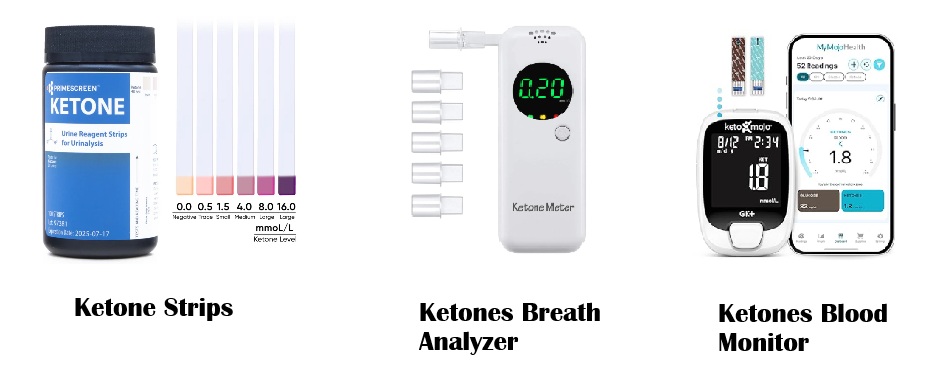
The three most important methods for measuring our ketones are:

Urine Ketone Strips:  A cheap and easy way to check ketones, though less reliable, involves using urine test strips. You simply urinate on the strip, ensuring the test area comes into contact with your urine stream. Afterward, wait a few seconds and compare the strip’s color with a chart to determine the results. The issue with this method is that it measures ketones being excreted. While this works early on when your body isn’t using ketones heavily, the results may become less accurate as you start using more ketones as fuel.

Ketone Breath Analyzers:  If you’re familiar with the Alcohol Meter used by the police, then you already understand the science behind this Keto monitoring tool. It’s a more accurate method compared to “Keto Urine Strips” and is the least invasive of the three methods. However, the results can be influenced by a recent meal or your hydration level. To use the monitor, simply breathe into the mouthpiece, and it provides a result based on the acetone level (a byproduct of Keto) in your breath.

Ketone Blood Meters:  Think of this device as similar to a standard glucose meter, but instead of glucose-detecting strips, it uses ones designed to measure ketone bodies. This is widely considered the gold standard for keto measurement. A good device often doubles as a ketone and glucose monitor, and some even combine the two readings to calculate an index of ketone effectiveness. While a blood reader is typically less expensive than a quality breath analyzer, the cost of strips can add up to the solution cost over time.

My final recommendation for a measurement method is to skip the urine strips and opt directly for the blood meter or the breath analyzer.  

In my next post, I’ll share the results you can get with the Keto Mojo Reader.
Until the next time!    🙂

Intermittent Fasting as a tool for losing weight

iFasting

One of the things that I love about science is that is always renewing for the better.  There is no stubborn pride in keeping things being done a certain way when there is evidence that the old way was the wrong way or at least, not the best way.

And there is evidence to support that keeping your insulin levels high all day is far from healthy.  With that being said, many meals a day (including snacks) was considered a very healthy way to feed our body. Now we know that fewer meals are better and that the quality of those foods matter the most.

The super important hormone known as Insulin goes to work every time we eat, taking glucose from our blood stream to our cells. But keep eating constantly modern food and soon enough, your body will start resisting the work of insulin, so our pancreas creates more insulin to complete the job. If this cycle keeps repeating for enough number of years, and you might end up with “Insulin Resistance” also known as the first step to become a Type 2 Diabetic. With that being said, maybe the 5 or 6 small meals a day might not be the best after all. In fact, is just the opposite.  Reduce your meals and get them no so far apart and that will translate to benefits.

Here is what I mean…

Arrange an 8-hour window to eat!
After that? Water, Water and more Water.  This is called Intermittent Fasting 16/8.

Before you go into shock and feed your mind with all kinds of defeating thoughts, please believe that this is something that you can do.  And it will help you to lose weight and in overall it will help you be a healthier person.

This is my Plan recommendation:

No Breakfast, but you can have black coffee (black as in no cream, sugar of any kind)
Good Lunch (of course of allowed protocol food)
Light and Healthy Dinner (just before the end of the 8 hours eating window)

Example:
Breakfast –   None, just have black coffee.  And remember, not Splenda or other Artificial Sweeter.
Lunch – Salmon with a green salad and half avocado.
Dinner – As much salad as you want and you can complete your dinner with some Macadamias nuts.

This can be a little hard in the beginning, so here are some tips to follow:

  1. Water, as sometimes we might think that we are hungry and we are just thirsty.
  2. Avoid going out at night the first couple of weeks. Keep away temptations for now.
  3. Go to bed as early as possible.

AGAIN:  This is only hard at the beginning, resist and believe in yourself.

Last but not least, hop on the scale so you can monitor the results of your new tool.

Tomorrow, we start doing 16/8 Intermitting Fasting!

And Here We Go!!

A new opportunity, life improving changes, a better you… No matter how I put it, a diet plan always starts with positivity feelings. You want to change something from you for the better. We know the science, we know the procedure and most importantly, we know the results.

As a very simple indicator, I am getting up on my scale and with that getting the following numbers:

Weight: 316.6 pounds
Fat %: 44.0

Not very different from our previous Profile, but this is our starting point for Keto.

Now, let us start putting the work to change those numbers.
There are many strategies to try, let us see how it goes.
On the next post, I will be sharing very important information from a blood test that I took a couple of days ago.

Ok, let’s Go! Start your Keto Engine Now!!! 🙂

Today you are allowed to “Eat/Say Goodbye” to some type of food

fastfood

Wait a minute… Are you actually suggesting we eat something off protocol today!? 

Let me put it this way…  I am a junk food regular, Diet Coke addict and a sworn salad hater that is about to embark in a journey into the unknown starting tomorrow.   So, YES, I want to say goodbye to some of my regular food, the same way that I would say goodbye to a friend.  Only time will tell if that long-lost friend ends up badmouthing me, revealing that he was not such a good friend after all.  

With that being said, excuse yourself today and eat away some of what has been until now your favorite food, because tomorrow, they will be gone. No harm done today, just savor the moment.  

Happy forbidden meal!

Supermarket list for Keto

ketosuper

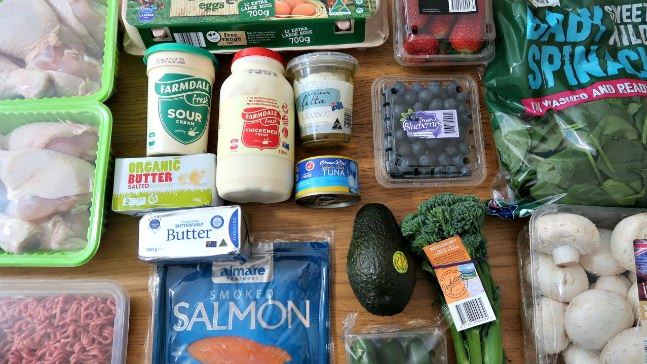
Ok, it’s time to get ready!  We must visit the Supermarket and get our food. I know that you are wondering what to get. Well, we know that we must get food for our Macro groups.  So let me break it down in that same order, by Macros:

FATS

Avocado
Nuts (Macadamia, Pecans, Brazil Nut)
Butter (look for grass-fed cows)
Olive Oil
Cheese (Fatty type)
Coconut Oil

PROTEIN

Chicken
Beef
Salmon
Sardines
Tuna
Eggs
Bacon

CARBS

Cauliflower
Broccoli
Spinach
Kale

And what to DRINK?

Coffe
Tea
Lots of WATER!

While we want to get creative with all these ingredients.  There are a couple of rules that if you follow the process will be a lot better.

  1. Salad First!   A Salad is something that can’t miss your new eating plan.  In fact, I want it to be that it should be the first thing to it. And no, I am not contradicting myself since I know that salad is part of the Carbs group, but this is the difference between empty carbs and healthy dense food as your carbs, quite a difference. We can use Olive Oil as dressing and get our carbs more aligned with our Fat goals.
  2. Fatty Protein better than lean protein:  Don’t trim your steak, cook it with its natural fat and even at a little of butter to it.  In Keto, protein shouldn’t be a lot, but protein with fat is adding to the hardest part of this diet protocol, that is “Eat Enough Fat”.
  3. Be sure to add the fatty part of your meal.  I didn’t like Avocados, but now that I see how this superfood can add up to any diet, it is part of my eating plan.  So, if you are even eating salad from a restaurant, ask if they can add Avocado. That will be a great PLUS.

Well, the starting point is coming (the 20th) so get that food ready, go to your preferred Supermarket and get all your food, you are starting Keto en just 5 days!!!

Sometimes Believing is Not Enough

believe

How do you help someone that suffers from compulsive spending?

Many people believe they can fix compulsive spending by switching from plastic to cash. Seeing real money disappear adds a powerful psychological impact.

What about smoking? Do you gradually reduce your daily cigarette intake?  No, for most people, you stop smoking COLD TURKEY.  Hey, this one I know from personal experience. And for this one help from friends or family is recommended.

And what about drugs? This one is tough—it falls into a category where control is minimal, and people may go to extreme lengths to obtain drugs. So going cold turkey could be in pair with being locked down somewhere having all kind of terrible withdrawal symptoms.

Ok, so what do we do with sugar addiction and weight loss? Do we follow a vague plan and hope for the best? Do we rely solely on willpower and self-belief?

NO, WE DONT!

In seven days, we’ll begin a new way of eating—unlike anything you’ve tried before.

We are going to:

  1. Stop Refined Carbs:  Bread, pasta, rice, tortillas, wafles, cake, crackers, etc.
  2. Stop Starchy Vegetables:  Potatoes, corn, plantains, yams, pumpkin, etc.
  3. Stop (for the time being) Fruits:  Yes, I know this one is very tough. And while you won’t be eating a banana, you can try berries, avocados, watermelons, tomatoes, peaches.
  4.  Stop Alcohol and sugary drinks:  No drinking, not even a beer and also stop juices, soda and anything that have sugar.  Your new drinks will be water, coffee and tea.

Maybe after reading all these “Forbidden Things” you still believe that you can do it. Maybe you believe you’re up for the challenge and possess extraordinary willpower.

I am here to tell you that no matter how much you believe, you won’t make it alone.  So, choose a diet guardian that will help you uphold this very difficult challenge.

You have one week to stop believing that you can do it alone and get a failproof strategy that will help you in time of weakness.  Use this week to find out as much as possible about clean/healthy keto and get your support partner as I am telling you again, this won’t be easy and while you might believe in yourself, this is as close and you can be to having a drug addiction (sugar addiction is real) so get help.

GET READY FOR THIS CHALLENGE, YOU AND YOUR DIET GUARDIAN! 

Dirty Keto vs Clean Keto

By now, most of us know that the Keto diet emphasizes high fat, moderate protein, and very low carbohydrates, right?
But here’s a better question: what kind of fats, proteins, and carbs should we be eating?

If you walk into a fast-food restaurant and order a bun less burger, are you technically following the Keto diet? 

The short answer is “Yes”. This is what is called “Dirty Keto” meaning that while you are following the rules of the keto diet, you are not choosing the best ingredients. You might lose weight with Dirty Keto but trust me, it can come at the expense of other important health markers.

Think about it, do you want your Keto dinner to be highly processed junk food?  Of course not!!

Now imagine instead a juicy steak paired with a fresh organic salad.
That’s Clean Keto, the kind your body will thank you for.

Now let me give you a few examples of Clean Keto food for each of the Macro Nutrient Groups:

FATS

Olive oil
Avocado oil
Macadamia oil
Coconut oil
Butter
Ghee
Cream cheese
Avocados

CARBS

Spinach
Tomatoes
Mushrooms
Peppers
Lettuce
Kale
Broccoli
Cabbage
Eggplant
Zucchini
Garlic
Onions
Cauliflower
Celery
Blackberries
Blueberries

PROTEINS

Bacon (yes, bacon)
Eggs
Cheese
Chicken
Turkey
Pork
Salami
Cod fish
Sardines
Salmon
Liver
Hummus
Tofu

As you get more comfortable with Keto, you’ll naturally build your own go-to list of clean, satisfying foods. You’ll see, you’re going to get good at this!

See you on the next post!     🙂

So how does this “Keto” diet works?

keto.jpg

To begin this journey, you need to set aside everything you think you know about nutrition. After all, who would have believed that a diet built on 75% fat could be “good”?
But here’s the thing: that’s exactly what we’re working with and getting.

This is a diet built on 75% fats, 25% protein, and about 5% carbohydrates. Yes, hitting those macronutrient ratios is challenging, but it’s precisely how we’ll direct your body into the fat‑burning metabolic state known as ketosis.

One non‑negotiable rule: no cheat meals, no cheat days. Stray from this, and you’ll get kicked out of that magical fat‑burning zone. What is worse, it might take five days or more to return to ketosis. That is, unless you’ve become fat adapted. A level that you achieved only after months of perseverance into the protocol. At that point, slipping slightly won’t derail you so badly. It is better however to early on, stick to the rules.


How “Keto” Works

Normally, your body runs on glucose, which comes from carbohydrates. But when carbs are scarce for a long time, the body switches to other kind of fuel, ketones. Ketones are created by our liver, and they come from fat. This is without doubt one of the cleverest survival mechanisms we have.

Now let us think about it this way: when you run low on glucose, your body signals you to eat more carbs. But when your fuel is fat (especially if you’ve got excess stored), those hunger signals basically disappear. As unlike glucose (that you can only store a very small amount) you won’t feel hunger because your body will be in auto-eating mode from a pool of very dense energy source, your body fat. That being said, one of the clearest signs you’re in ketosis are: reduced cravings, reduced hunger, even when you’re eating less.

You might wonder: How long does it take to get into ketosis? That depends on how well or “damaged” your metabolic system is. For someone who’s overweight or obese, it’s entirely possible to enter ketosis in a week or more. Of course, only as long as you stick strictly to the plan and avoid anything that might pull you out.

Yes, I know… you are getting excited already.

More to come in our next post:

Clean Keto vs Dirty Keto – Choosing the right food

P.S.
I will be posting many times this week and we plan to start the diet on 10/13.