To CheatDay or Not To CheatDay – That is the question

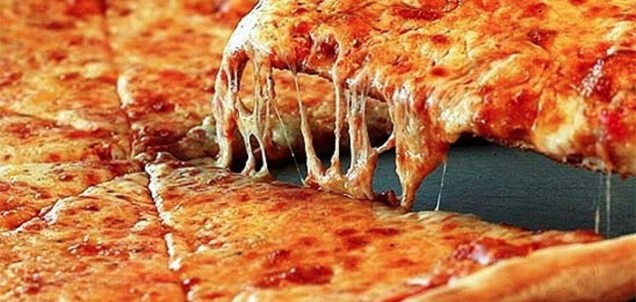
pizza

If you’re on a diet, it’s probably a restrictive one. You’re sticking to your chosen plan, hoping for the same thing as everyone else, quick results that give you the motivation to keep going. The idea is to stay committed until you finally reach your goal.

In a previous post, I’m sure I explained why a diet isn’t a permanent solution. In fact, losing weight is secondary! The real goal is to make changes to your eating habits and activity level until they become a lifestyle. For example, take avocado, such a healthy food. It seems like a no-brainer to include it in your diet, right? Well, I don’t like avocados! But since I understand the benefits of this amazing fruit, I’m training my taste buds and slowly adding it to my meals. Now I can eat a quarter of an avocado without any problem. This way, you’re learning new choices that are good for you while letting go of the ones that aren’t.

Wait a second… all this talk and not a single mention of Cheat Day. Let’s dive into that now. A Cheat Day is simply a day when you indulge in foods that are outside your regular diet.

The question is… How important is it?  Do we need it at all? Can it work for everybody?

First, who is it for? It’s for people who can use it as a reward system. For example, if you hit your 10-pound goal this month, you get to enjoy a cheat day with up to three slices (slices, not pies!) of your favorite pizza. If that’s something you can look forward to with excitement, then a Cheat Day of Pizza is perfect for you.

Can it be any kind of food? Let me give an example. I plan to schedule a Cheat Day with the same 10-pound goal, and my cheat food is donuts. WRONG! That’s not a good choice. Why? Because donuts were the junk food that pushed me over the edge, like drugs to a junkie, booze to an alcoholic, or cigarettes to a smoker. Plus, donuts are ranked among the worst foods on the planet. Unlike pizza, the toll on your body is just too high.

Not everyone needs or benefits from a cheat day. If you don’t miss foods that aren’t part of your diet and feel better sticking to healthier choices, just keep it up and move forward.

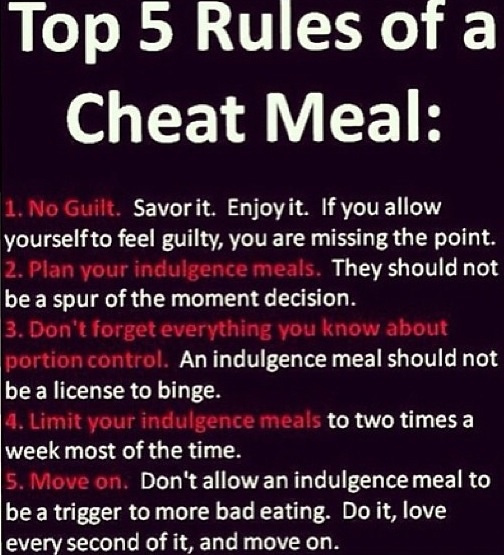
Ok, to finish this post, I will include something that I saw online in more than one place.  The 5 Rules of a Cheat Day.
cheat-day

To be honest, I don’t like #4.  I will stay with Cheat Days for very special occasions. Or better yet, if you don’t need a Cheat Day, better.

I will see you on the next post.

To vegan, or not to vegan, that is the question.

vegan

Ok, this week I will be taking a look at a very interesting and at the same time a controversial diet. And the reason why I’m saying this is because Vegan is a few steps further for the purpose of not feeding on animals.

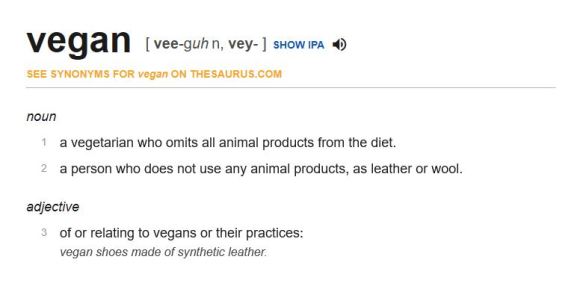
Let’s start by looking at the word on the dictionary:

VeganDefinition
Definition of the word Vegan from Dictionary.Com

Yes, we already knew the first definition, but what about the next one? or the example below the third definition?  Seeing this encloses the word in something more than health.  Being Vegan comes with social implications.  And going back to the diet, you would not tell a vegetarian that she is cheating at her diet protocol if she drinks milk or has an omelet, right?  Well, a vegan person does not want cows to be milked and less to eat unborn chicks. So there you have it.  In a nutshell, no animals or animal-derived food or products (clothes, shoes) if you want to go the whole nine yards.

A very interesting point of the Vegan Diet is that is 100% Ok with a lot of forbidden food on many other diets. As long as it doesn’t come from an animal, we’re good.

If you can’t live without Bread, Pasta, Rice and the rest of Carb based food, maybe this Diet is for you. Take into consideration however that a big amount of vegetables will be mandatory to try to cover your daily quota of nutrients.  Just so you know, this is one of the big complaints about this diet.

If you are interested, you can continue right where I stopped.  Since I have the condition known as “Insulin Resistance”, I can’t go with a free pass on Carbohydrates, I must control my insulin spikes instead of increasing the frequency.  That is why a very low carb diet like the ketogenic diet is better for me.

It was very interesting, and a lot of people swear by the results of this diet. But as I already said, it is not aligned with the results that I am searching for.

So, I won’t be a Vegan.
In fact, not even an Ovo-Lacto Vegetarian (Milk and Eggs allowed).

But maybe you can…

It’s not what you KNOW… It’s what you can PROVE in Court!

isnotwhatyouknow

No matter how much fiction a movie contains, there’s always a chance to pick up real-life lessons or useful insights that teach valuable things about life. And if the iconic phrase at the top of this post doesn’t ring a bell, it’s from the movie “Law Abiding Citizen”.

In this movie, the main character is determined to see two criminals convicted for killing his wife and young daughter. The DA, personally handling the case, strikes a deal: the full penalty for one of the accused and a third-degree charge for the other. Meaning death row for one and at most five years for the other. Clyde (Gerard Butler), heartbroken and tearful, pleads for the chance to testify and convince the jury of what he witnessed. The DA warns him of the risks and insists this outcome is a victory. Clyde disagrees and keeps fighting to bring justice to both offenders. That’s when the DA delivers the memorable line: “It’s not what you know… it’s what you can prove in court!”

Enough about the movie! If you want to see more and find out what that phrase did to Clyde, go watch it. Now, let’s talk about how this relates to our weight loss goals.

I have a friend who is obese, like me, and finds losing weight very difficult, just as I do. He’s quite negative about fitness because he believes that for people like us, losing weight is far too hard and, more importantly, even if we manage to shed some pounds, we’ll soon gain it all back; possibly with extra weight on top of what we started. Although it’s a pessimistic way of thinking, I can’t help but see some truth in his opinion.

The fitness industry is living proof that my friend has a point. How many people do you know who start a diet to reach a goal, only for the pounds to return once the goal is met? As my friend noted, sometimes they come back with a vengeance.

What can we do?  Are we doomed to this vicious cycle of losing weight and gain it all back again and again?

Here I have an idea that can be useful to people like us.  And let me start by rephrasing our famous header:

IT’S NOT THE POUNDS THAT YOU LOSE, IT’S THE WEIGHT THAT YOU KEEP!

With that being said, let me tell you that it will be better to lose 10 pounds and keep them off that losing 20 pounds and gain them back in a couple of months.

Here’s the idea: imagine you lose 15 pounds in a month, no small feat, and now you’re at 200 pounds. Give yourself a couple of weeks to adjust to this new weight. During this time, keep a close eye on your 200 pounds, and if you notice a two-pound gain, take action to lose it and get back to your new base weight of 200 pounds.

I truly believe that after two weeks of fine-tuning, you’ll be ready to set, achieve, and maintain another weight loss goal.

Good Luck!

Spot Reduction? No, there is no such thing!

spotreduction

You might not be familiar with the term “spot reduction,” but I’m sure plenty of people still believe it’s possible, even today. Maybe even you!

Spot reduction is a fitness myth claiming that exercising a specific area can reduce fat in just that part of the body. For example, if someone has belly fat, they might believe doing lots of crunches will target and burn fat in that area. This idea was hugely popular in the fitness industry during the 80s, so much so that many industry icons, built part of their fame by promoting the spot reduction myth.

tonylittle

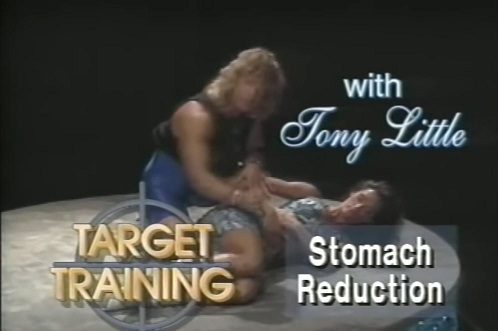
Tony Little, remember him? The fitness celebrity who called himself “America’s Best Trainer” was famous for promoting spot reduction workouts. His program, “Target Training,” was a massive hit. I even had the tapes. What can I say… back in the 80s, the theory seemed perfectly logical.

You’re probably wondering two things: First, if spot reduction is a myth, why are crunches still recommended? And second, if spot reduction isn’t real, then how do you actually lose fat?

To answer the first and part of the second question, crunches are still a great exercise for building strong abs. If your goal is to have washboard abs in the future, you’ll need to strengthen your abdominal muscles and reduce body fat, so those muscles become visible. That’s why crunches remain a solid choice. Just remember, there’s a right and wrong way to do them, so be sure to research proper form to avoid injury.

For our second question, fat is reduced evenly across the body through a combination of exercise, a proper diet, and adequate rest. As simple and amazing as it may sound, that’s the winning formula. Here at TheHetaBlog, we’ll be talking about this a lot.

Now, please, pay attention (especially if you are very fat or obese):
DO NOT, let me say that again,
DO NOT START A HEAVY WORKOUT TRAINING WITHOUT MEDICAL SUPERVISION. This is your life we are talking about.  Do the right thing and check your condition first and choose your training later.  If you are too out of shape, probably it will be something simple like walking, but let’s someone who understand the condition of your body do the call.

So, there you have it! You can’t lose fat in just one spot, just like you can’t lower the water level from only one corner of a pool by scooping water out there. The water level will drop across the whole pool, just like fat loss happens throughout your entire body.

Now that you know, the next time that you see someone talking about “spot reduction” or just saying something like “I got these exercises that will take away the fat from insert spot here“, do that person a favor and teach him.

Or better yet… Say to look for the answer here at     http://www.thehetablog.com        🙂

Meet the enemy of every weight loss plan! Don’t be deceived by its sweetness

Every weight loss plan is built on its own set of rules and knowledge. Mine is no different, and I believe the Ketogenic Diet has shown enough evidence to prove it’s a solid step toward overcoming insulin resistance. As mentioned in our last post, insulin resistance is something we need to avoid at all costs, as it opens the door to many health problems.

Maybe you’re not following Keto and have your own plan that you trust will bring results. That’s totally fine! Here’s a bit of advice that can apply to any diet if you’re overweight or obese like I am.

CUT DOWN ON THE SUGARS!!!

Sugar is in almost everything we eat, and even if you don’t see “sugar” listed in the ingredients, it’s often hiding under other names like high-fructose corn syrup (HFCS), dextrose, sucrose, fructose, lactose, and more.

Now, don’t get me wrong. It’s not that our bodies can’t handle a normal amount of sugar; it’s actually a primary source of energy. But you likely consume more sugar than you need, and certainly more often than necessary.

Another thing to consider is the type of sugar. I mentioned high-fructose corn syrup (HFCS), and you’ll be doing yourself a big favor by avoiding it like the plague. Instead, get your daily dose from whole fruit (not juice), which comes with fiber to help prevent the glucose spikes we often get from liquid sugars like juices.

Try this experiment: write down everything you eat in a day, including snacks, and then use an app like “My Fitness Pal” to find out how many carbs, or what will be converted to sugar (glucose), you’re consuming. To do this, take the carbs value of each food, subtract the fiber, and you’ll get the Net Carbs. Then, add them up for your total for the day.

Let’s do an example:
A regular Peanut Butter Sandwich and a can of Coke.

Two slices of white bread:  25.3g – 1.2g = 24.1g
Two spoons of peanut butter = 7g
One can of Coca Cola = 39g

Our little snack means 70g of Carbs

This is about the maximum for any low-carb diet and roughly a third of a diet that doesn’t limit carb intake. My suggestion for this test? Skip the Coke and swap the white bread for a high-fiber option like German pumpernickel.

If you get into the habit of reading labels, you might realize you’re consuming more sugar than you think. Too much sugar can quickly lead to insulin resistance and, if left unchecked, type 2 diabetes. So, let’s get into minding the amount of carbs that we get into our body, as it is quite possible that you are having more than you need.

See you on our next post.

Insulin Resistance… You Got to Understand THIS!!

Dear Reader:

I’m not sure how far off your regular weight you might be. But if it’s a significant amount, and you’re dealing with a large abdomen while struggling to lose weight, it’s possible you could be experiencing something known as Insulin Resistance.

Ok, let’s begin with the standard definition.

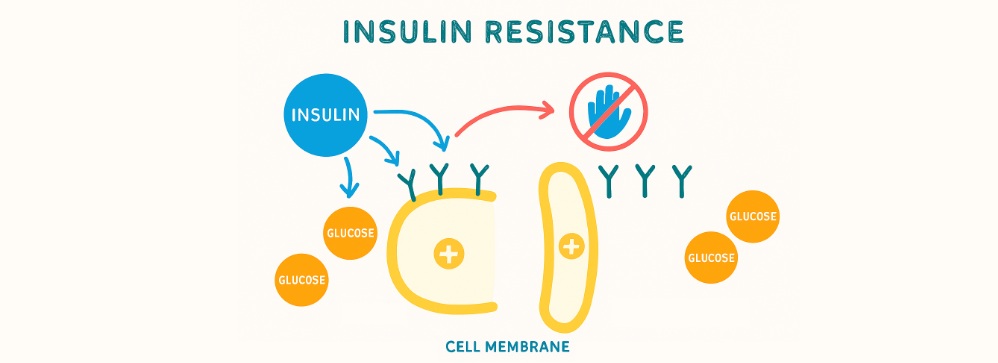
Insulin resistance (IR) is a pathological condition in which cells fail to respond normally to the hormone insulin.

The normal response of cells to insulin is quite simple: insulin allows cells to absorb glucose from the blood. In other words, insulin is the hormone that transports blood sugar, or glucose, from the bloodstream into the cells. Under normal conditions, the pancreas releases a specific amount of insulin, which helps deliver the glucose from your last meal to your cells—essentially feeding them.

In insulin resistance, the cells resist or reject the effects of insulin. This condition usually develops over many years due to excessive carbohydrate intake. To compensate, the pancreas produces more insulin to overcome the resistance, nourish the cells, and maintain normal blood sugar levels, which is a top priority for the body.

You might wonder: If my pancreas can handle insulin resistance, why should I be concerned about it?

This vicious cycle can’t continue indefinitely without leading to harmful consequences. Over time, your cells become more resistant, forcing your pancreas to produce more insulin to keep blood sugar levels normal. Eventually, your pancreas won’t be able to produce enough insulin to combat the resistance, and your blood sugar levels will begin to rise. At this point, maintaining normal blood sugar levels becomes much harder, and this condition is known as prediabetes.

You don’t need to be a genius to see where this is headed. Insulin resistance is essentially the precursor to Type 2 Diabetes. If you’ve ever wondered why the medical approach to treating Type 2 Diabetes often involves adding more insulin to your body (to support an overworked pancreas), now you know. Type 2 Diabetes is simply an advanced stage of insulin resistance.

Another important reason to avoid insulin resistance, especially if you’re trying to lose weight, is this: when insulin levels are high, the body won’t burn fat. Insulin is often referred to as “The Storage Hormone” for good reason. Glucose is either used by the body as fuel or stored as fat for future use.

In my recent blood test, my insulin levels were three times higher than the maximum normal range, but my blood glucose levels were normal. This happens because my pancreas is overworking, producing 300% more insulin to maintain normal blood sugar levels. If I don’t address this issue, I’ll likely end up with Type 2 Diabetes. Oh, and did I mention that losing fat is going to be incredibly difficult with my current insulin levels?

I’m confident you understand what insulin resistance is and the harm it can cause to your body. In the next post, we’ll discuss some steps you can take to address it.

Hint: Our diet helps combat this condition.

See you on the next post.

Ok, I screw up… Now what?

Haagen-Dazs-Logo

I have to admit it, I was feeling low and gave in to temptation.    😦
Knowing that ice cream is packed with sugar, it’s a tough setback for a diet like the Ketogenic Diet, especially at the start.

The first question is, “What do you do?” and the answer is simple… YOU STOP! And don’t say it’s obvious, because for people like us, it’s not. It wasn’t logic that led you to break your diet, so why assume it will be logic that gets you back on track?

It’s pretty common to feel guilty after indulging in the forbidden fruit, uh, I mean, food. Just as common is the “What the hell, I’ll start again tomorrow” mindset. Avoid falling into that trap. When something goes wrong, don’t make it worse; learn from the experience and move forward.  If you notice your car has a flat tire before heading to the office, what do you do? You fix the tire and get on your way! You don’t pull out a knife, and slash the other three tires, right? But that’s essentially what you’re doing when you eat something you weren’t supposed to and decide to ruin the rest of the day.

Wait a minute! What about the learning part? Pay attention to the things that tripped you up. You were feeling a bit down (defenses low), and you walked right past that place selling your favorite “sin food.” Next thing you know, you’re stuffing your face. So, if I’m feeling down, I won’t go there, or I won’t go there alone. This is just a small example. You’ve got the key to your own control, use it!

Don’t feel bad for breaking your diet; feel good about the lesson you learned. However, in the case of Keto, breaking the diet with sugary foods can have significant consequences. The first is that you’ll fall out of Ketosis, and it might take a few days to get back on track.

That’s tough news, but I want to let you know that I have a plan to bounce back quickly. Stay tuned for more details in the next post!   🙂

Monitoring Our Weight Loss Plan – PART II

Yes, this post builds on the previous one, and while this type of monitoring might not be useful for other weight loss programs, we can’t deny that when following “Keto,” keeping track of our level of “Ketosis” is crucial.

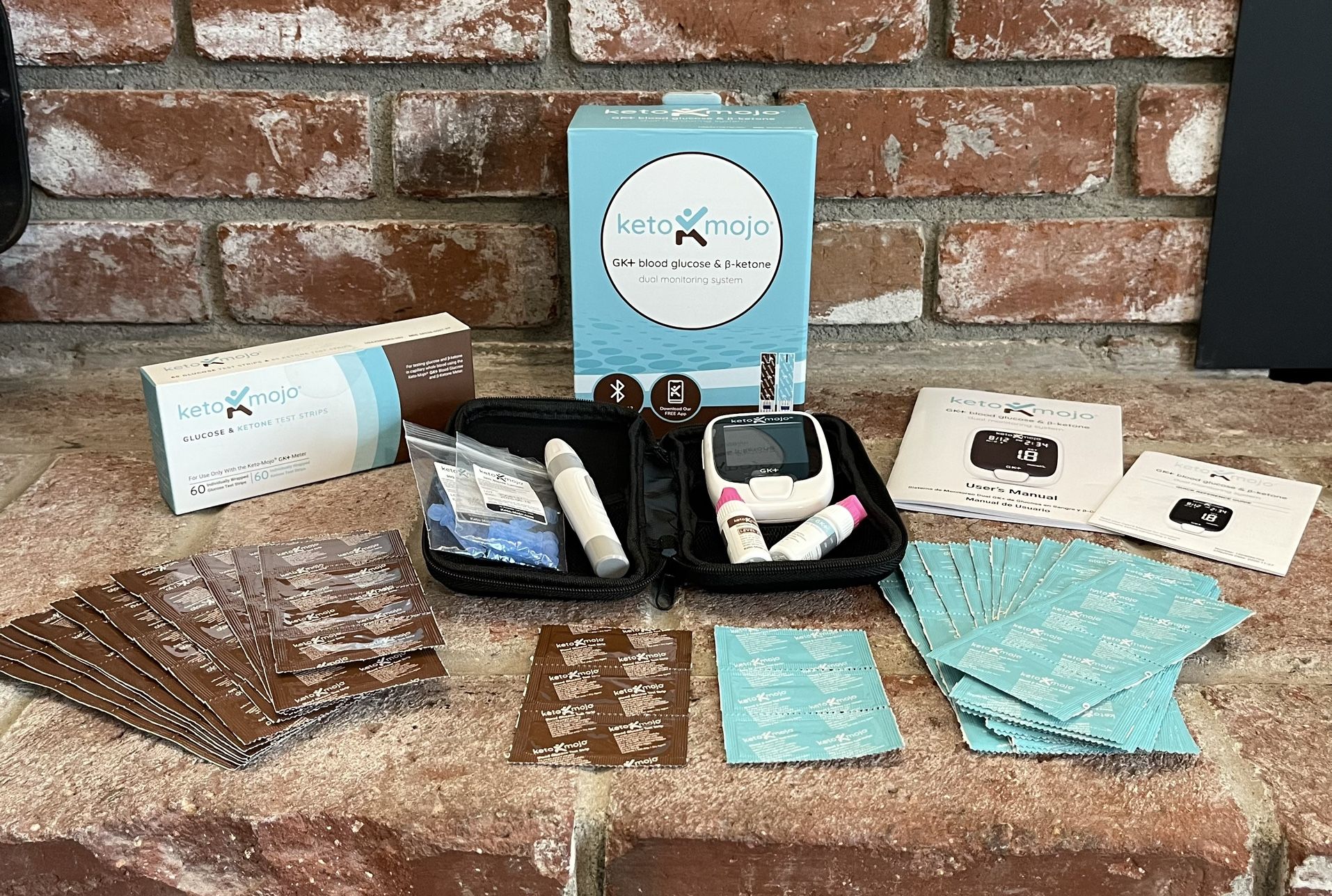
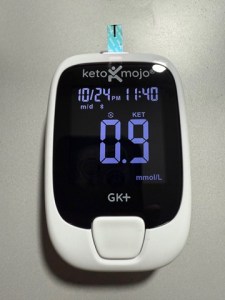
I went with the “Keto Mojo Blood Monitor,” and as I mentioned earlier, it functions just like a standard glucose monitor. Simply load the device with the blue ketone reader strip, prick your finger, collect a small drop of blood on the tip of the strip, and wait for the results.

This was my result for last Friday. 

If your level is below 0.5, it means you’re not in “Nutritional Ketosis.” If that’s the case, don’t worry; just stick to the protocol. Get your carbs only from the list of approved vegetables, include your protein, and focus on consuming plenty of healthy fats.

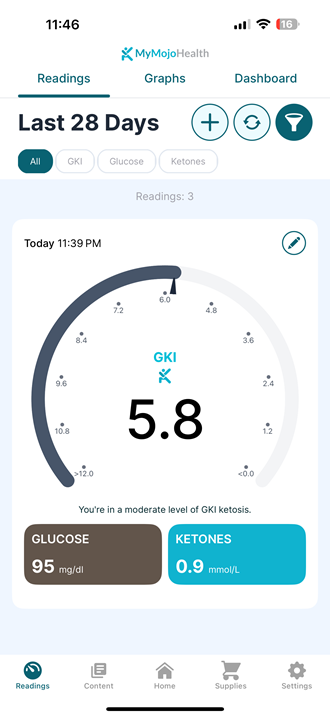
Another thing to keep in mind is that the Keto Mojo comes with blood glucose strips, and when you measure both glucose and ketones, the device can provide a reading called the GKI. This index is gaining recognition as a more valuable metric to monitor since it factors in your blood glucose levels.

How often should you measure? Don’t do it too often, twice a week or even once a week is enough. Another good time to measure is if you think you’ve eaten something that might have knocked you out of ketosis. But remember, if you stick to the protocol, you’ll soon notice other signs of being in ketosis, with the lack of hunger being the easiest to recognize.

On our next post, we will continue with other steps in weight monitoring. 

See you there!


Monitoring Our Weight Loss Plan – PART I

While many nutrition experts claim that a diet plan should come naturally without special monitoring, I have to disagree. Especially if you have a history of consuming unhealthy food for years and, like me, are obese. In the case of following the Keto Diet protocol, as we are, monitoring becomes even more crucial.

That’s why the next three posts will focus on the topic, “Monitoring Our Weight Plan.” 

How can you tell if you’re on the right track to achieving the benefits of the Ketogenic Diet?

The answer is: When you spend most of your time in nutritional ketosis. This metabolic state is quite fragile, especially in the early stages, which is why monitoring is crucial. 

What is Nutritional Ketosis?  This metabolic state happens when carbohydrate intake is sufficiently low, prompting the liver to convert fats into ketones, which are then used as a source of energy.

Given that definition, the goal of measuring is to determine whether we are in nutritional ketosis and to what extent.

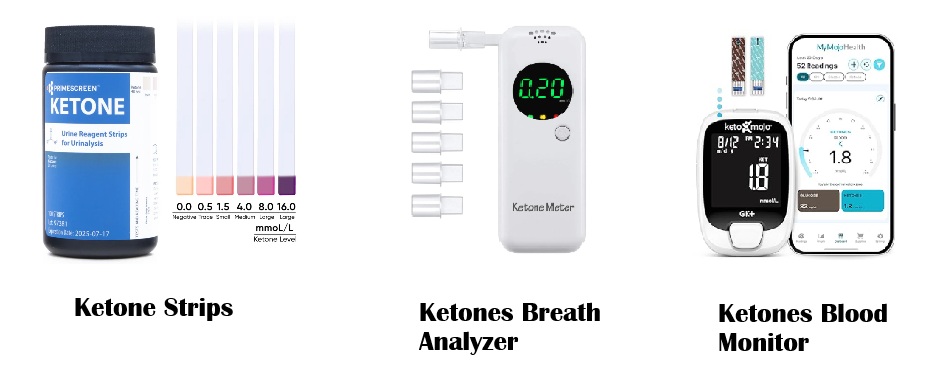
The three most important methods for measuring our ketones are:

Urine Ketone Strips:  A cheap and easy way to check ketones, though less reliable, involves using urine test strips. You simply urinate on the strip, ensuring the test area comes into contact with your urine stream. Afterward, wait a few seconds and compare the strip’s color with a chart to determine the results. The issue with this method is that it measures ketones being excreted. While this works early on when your body isn’t using ketones heavily, the results may become less accurate as you start using more ketones as fuel.

Ketone Breath Analyzers:  If you’re familiar with the Alcohol Meter used by the police, then you already understand the science behind this Keto monitoring tool. It’s a more accurate method compared to “Keto Urine Strips” and is the least invasive of the three methods. However, the results can be influenced by a recent meal or your hydration level. To use the monitor, simply breathe into the mouthpiece, and it provides a result based on the acetone level (a byproduct of Keto) in your breath.

Ketone Blood Meters:  Think of this device as similar to a standard glucose meter, but instead of glucose-detecting strips, it uses ones designed to measure ketone bodies. This is widely considered the gold standard for keto measurement. A good device often doubles as a ketone and glucose monitor, and some even combine the two readings to calculate an index of ketone effectiveness. While a blood reader is typically less expensive than a quality breath analyzer, the cost of strips can add up to the solution cost over time.

My final recommendation for a measurement method is to skip the urine strips and opt directly for the blood meter or the breath analyzer.  

In my next post, I’ll share the results you can get with the Keto Mojo Reader.
Until the next time!    🙂

Today you are allowed to “Eat/Say Goodbye” to some type of food

fastfood

Wait a minute… Are you actually suggesting we eat something off protocol today!? 

Let me put it this way…  I am a junk food regular, Diet Coke addict and a sworn salad hater that is about to embark in a journey into the unknown starting tomorrow.   So, YES, I want to say goodbye to some of my regular food, the same way that I would say goodbye to a friend.  Only time will tell if that long-lost friend ends up badmouthing me, revealing that he was not such a good friend after all.  

With that being said, excuse yourself today and eat away some of what has been until now your favorite food, because tomorrow, they will be gone. No harm done today, just savor the moment.  

Happy forbidden meal!