Wait a minute… Are you actually suggesting we eat something off protocol today!?
Let me put it this way… I am a junk food regular, Diet Coke addict and a sworn salad hater that is about to embark in a journey into the unknown starting tomorrow. So, YES, I want to say goodbye to some of my regular food, the same way that I would say goodbye to a friend. Only time will tell if that long-lost friend ends up badmouthing me, revealing that he was not such a good friend after all.
With that being said, excuse yourself today and eat away some of what has been until now your favorite food, because tomorrow, they will be gone. No harm done today, just savor the moment.
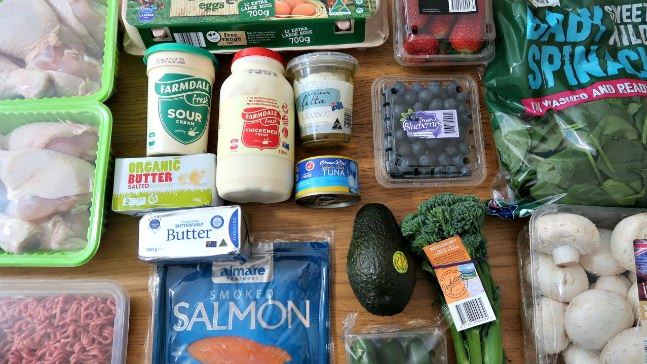
Ok, it’s time to get ready! We must visit the Supermarket and get our food. I know that you are wondering what to get. Well, we know that we must get food for our Macro groups. So let me break it down in that same order, by Macros:
FATS
Avocado
Nuts (Macadamia, Pecans, Brazil Nut)
Butter (look for grass-fed cows)
Olive Oil
Cheese (Fatty type)
Coconut Oil
PROTEIN
Chicken
Beef
Salmon
Sardines
Tuna
Eggs
Bacon
CARBS
Cauliflower
Broccoli
Spinach
Kale
And what to DRINK?
Coffe
Tea
Lots of WATER!
While we want to get creative with all these ingredients. There are a couple of rules that if you follow the process will be a lot better.
Salad First! A Salad is something that can’t miss your new eating plan. In fact, I want it to be that it should be the first thing to it. And no, I am not contradicting myself since I know that salad is part of the Carbs group, but this is the difference between empty carbs and healthy dense food as your carbs, quite a difference. We can use Olive Oil as dressing and get our carbs more aligned with our Fat goals.
Fatty Protein better than lean protein: Don’t trim your steak, cook it with its natural fat and even at a little of butter to it. In Keto, protein shouldn’t be a lot, but protein with fat is adding to the hardest part of this diet protocol, that is “Eat Enough Fat”.
Be sure to add the fatty part of your meal. I didn’t like Avocados, but now that I see how this superfood can add up to any diet, it is part of my eating plan. So, if you are even eating salad from a restaurant, ask if they can add Avocado. That will be a great PLUS.
Well, the starting point is coming (the 20th) so get that food ready, go to your preferred Supermarket and get all your food, you are starting Keto en just 5 days!!!
By now, most of us know that the Keto diet emphasizes high fat, moderate protein, and very low carbohydrates, right? But here’s a better question: what kind of fats, proteins, and carbs should we be eating?
If you walk into a fast-food restaurant and order a bun less burger, are you technically following the Keto diet?
The short answer is “Yes”. This is what is called “Dirty Keto” meaning that while you are following the rules of the keto diet, you are not choosing the best ingredients. You might lose weight with Dirty Keto but trust me, it can come at the expense of other important health markers.
Think about it, do you want your Keto dinner to be highly processed junk food? Of course not!!
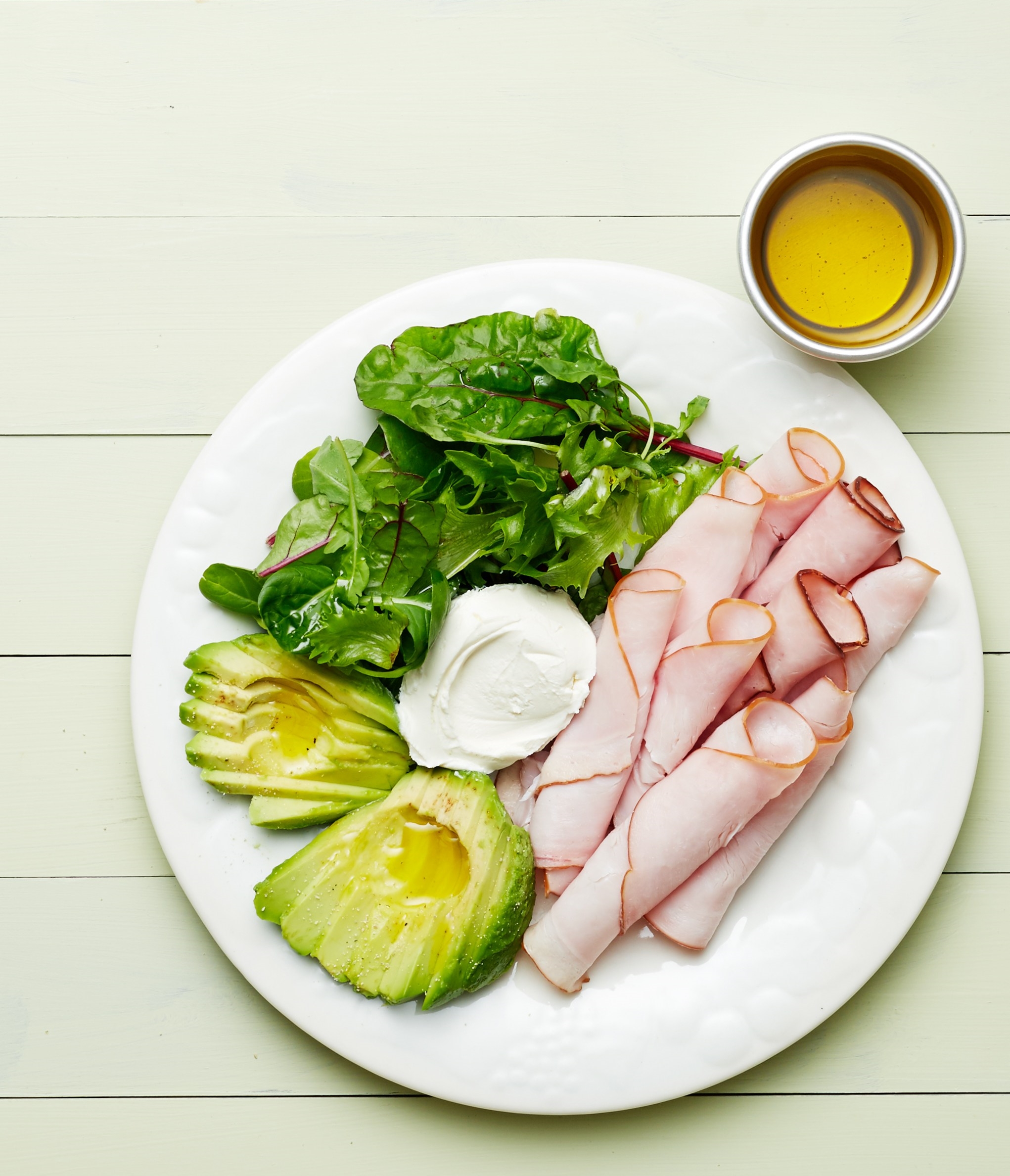
Now imagine instead a juicy steak paired with a fresh organic salad. That’s Clean Keto, the kind your body will thank you for.
Now let me give you a few examples of Clean Keto food for each of the Macro Nutrient Groups:
As you get more comfortable with Keto, you’ll naturally build your own go-to list of clean, satisfying foods. You’ll see, you’re going to get good at this!
To begin this journey, you need to set aside everything you think you know about nutrition. After all, who would have believed that a diet built on 75% fat could be “good”?
But here’s the thing: that’s exactly what we’re working with and getting.
This is a diet built on 75% fats, 25% protein, and about 5% carbohydrates. Yes, hitting those macronutrient ratios is challenging, but it’s precisely how we’ll direct your body into the fat‑burning metabolic state known as ketosis.
One non‑negotiable rule: no cheat meals, no cheat days. Stray from this, and you’ll get kicked out of that magical fat‑burning zone. What is worse, it might take five days or more to return to ketosis. That is, unless you’ve become fat adapted. A level that you achieved only after months of perseverance into the protocol. At that point, slipping slightly won’t derail you so badly. It is better however to early on, stick to the rules.
How “Keto” Works
Normally, your body runs on glucose, which comes from carbohydrates. But when carbs are scarce for a long time, the body switches to other kind of fuel, ketones. Ketones are created by our liver, and they come from fat. This is without doubt one of the cleverest survival mechanisms we have.
Now let us think about it this way: when you run low on glucose, your body signals you to eat more carbs. But when your fuel is fat (especially if you’ve got excess stored), those hunger signals basically disappear. As unlike glucose (that you can only store a very small amount) you won’t feel hunger because your body will be in auto-eating mode from a pool of very dense energy source, your body fat. That being said, one of the clearest signs you’re in ketosis are: reduced cravings, reduced hunger, even when you’re eating less.
You might wonder: How long does it take to get into ketosis? That depends on how well or “damaged” your metabolic system is. For someone who’s overweight or obese, it’s entirely possible to enter ketosis in a week or more. Of course, only as long as you stick strictly to the plan and avoid anything that might pull you out.
Yes, I know… you are getting excited already.
More to come in our next post:
Clean Keto vs Dirty Keto – Choosing the right food
P.S. I will be posting many times this week and we plan to start the diet on 10/13.
Some people think that selecting a diet is an easy task. And I believe it is, but when others decide for you. That is, in other words, you go to the doctor to get fix, sorry, to get fit.
If you want professional help on deciding what to use as a diet, I will recommend that you put yourself in the hands on a good “Dietitian”. Please note that I said “Dietitian” and not “Nutritionist”. The first one requires a bachelor’s degree in nutrition and dietetics while the later can be achieved without formal qualifications. Is not my intention to degrade nutritionists, as I know that many of them have some kind of degree in nutrition or related fields, is the lack of curriculum standardization that work against them.
Let me give you an example of what a dietitian would do in a hypothetic case:
Patience with a severe case of NAFLD (Non-Alcoholic Fatty Liver Disease) walks into our dietitian’s practice and asks for a diet to put him on the right track to lose weight.
Do you think that is a good idea that our dietitian includes fruits as part of the diet?
Why not? Fruits are a common denominator in just about every balanced diet and the fiber would be of great help to our patience.
(imagine the Buzz sound of a wrong answer)
Fruits contains two types of sugar: fructose and sucrose. sucrose can be broken down by just about any cell in our body. In contrast, fructose has to be managed by the liver exclusively. If our patience already has an impaired liver because of NAFLD, adding extra work with fructose process is not doing anyone a favor. Therefore, a dietitian would possibly wait to correct some degree of NAFLD before recommending fruits.
Do you understand? Is not that I am saying that fruits are a bad choice for a healthy diet, only that it may not be the best choice for someone with a condition like NAFLD. And that is a kind of choice that a dietitian would do.
Let me end this post by saying that in my opinion diet is easily 75% part of the formula for health. Yes, I know, exercise is important too, but you simple cannot exercise out a bad diet, you simple can’t. But don’t worry, we don’t plan to only go for the top tier option. Exercise is also part of the solution.
Now let’s go to work! You have a few days to search for diet options. I will do the same and on the next post I will introduce my winner and maybe also the runner-up.
Until our next post and have a good time researching!
Let us imagine that you already arranged a good plan for eating healthy and also will add a few hours of light exercise during the week. Great!!! A fair question would be: Why, do I need to visit my doctor if he or she would 100% approve what I am planning to do?
The answer (totally in your favor) is: Because a medical checkup can get you essential information that you should consider during your weight loss program.
Let’s say that you go to the doctor and tests reveal that your blood sugar is too high. Of course, your doctor won’t tell you to drop your plan but maybe add medical suggestions that could improve how efective and safe it executes. Maybe you will get a note to keep away for certain foods or monitor your glucose levels. The same goes for blood pressure and other parameters that have a profound impact on your health.
A couple of years ago, I went to the doctor for a case of torticollis and some of the tests revealed a condition in the cervical area of my spinal cord (neck area) that requires attention. Luckily enough, the doctor said that “Cervical Therapy” would suffice. But my point is that because of this finding, the doctor strongly suggested keeping away from high impact exercises, even if I could go back to a normal weight. This was not a preventive checkup, and I got very important for any fitness plan that includes exercise. So, knowing where you stand before initiating is always a wise decision.
Work with your doctor and try to get a health picture of you as wide as possible. The more information the better. I believe that your “Before” checkup should include but not limited to:
1) Complete “Lipids Profile” (your Cholesterol numbers). Please tell your doctor to include the not always present, genetic marker Apo (a) and the modernly used risk indicator Apo B. 2) Glucose Tests (your blood sugar numbers). This is usually measuring your glucose level at the time of the test, but how about asking for an “A1C” test that is a better assessment for glucose healthy levels? and while you are at it, let us get a “Fasting Insulin” Test. I am sure that your doctor won’t complain getting this additional knowledge. 3) Liver Test is also mandatory when assessing metabolic health. If you are obese like me or even overweigh, there is the possibility of having some degree of NAFLD (Non-Alcoholic Fatty Liver Disease) aka Fat in your Liver.
So go ahead! Get your doctor involved and start your journey knowing important things about your current self and that you have the approval of your medical professional for your journey to a healthier You!
In the last post we decided that to monitor our progress we will concentrate on Fat. And while we also said that BMI (Body Mass Index) could be a way to measure, I don’t think that BMI should be the method of choice nowadays. BMI is good when you don’t have a smart scale around and you are not very muscular.
If you want my opinion, I would skip BMI altogether and go right into BFP (Body Fat Percentage) as for us in this Blog, fat is the name of the game.
So, let us focus in getting a good Weight Scale (Smart Weight Scale). One that can compute Body Fat Percentage for us.
A Smart Weight Scale is not too different in appearance to any digital scale that only compute weight. Of course, after getting the results, the similarity ends.
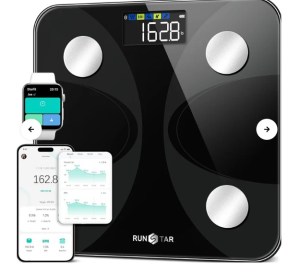
Here is a photo of the one that I am using now. I believe it was like 25 dollars at Amazon. So is not like getting a proper device will break the bank for you.
Now, in any modern digital weight scale, you will expect at least the following: 1) More than just Weight and BMI, again we won’t settle for less than a weight scale with Body Fat readings. Some scales can even split Fat in subcutaneous (under the skin) and the visceral fat (around the organs). In case you are wondering, having excess of visceral fat is worst. 2) Phone (and sometimes smartwatch) App to track your data. You will pair your scale with your phone and every time you step into your scale, your data will be transferred automatically. 3) Profiles is a desired feature if the weight scale is shared and there are other family members following your new healthy trend of tracking your weight and fat percentage.
As I am not recommending any brand or model of weight scale, go online and see a couple of showdown videos to help your selection. Use a prompt like “Best Smart Scales of 2025” or something similar and start reviewing!
Maybe some of you are asking yourself, what is the deal with this BFP? I already got a good scale that measures weigh and BMI, why should I change to BFP? After all most of doctors still rely on BMI on patients’ assessments.
Yes, that is true. There are a lot of physicians that still use BMI for weight diagnostic, but this number is going down each year. Specially, after 2023 that the American Medical Association (AMA) redefined the limitations of BMI as a sole indicator for assessing weight and obesity risks.
Ok, now to close this post, I will give you a practical example that will let you see why “BFP > BMI”.
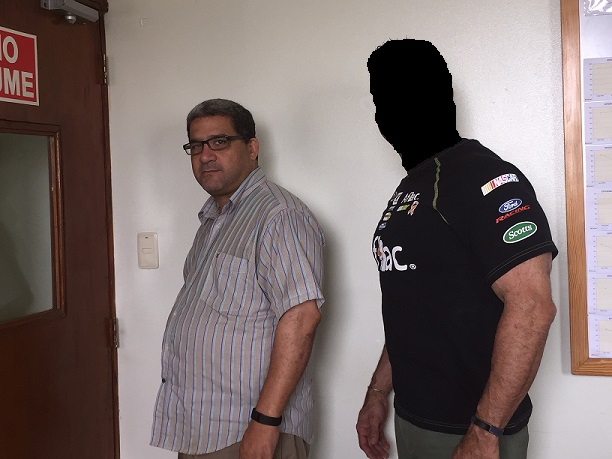
Here I got a photo (very old photo) that we will use to show our point. Look at the two subjects in the photo.
Although the one on the right is 4″ taller than me, consider the following data:
BMI values = 40.5 – 30.2 to BMI, BOTH SUBJECTS ARE OBESE!!!
BUT if we go the BFP route, we see that in my case, half of my body is fat and in the subject of the right is less than 20% and that is why these two are so different at plain sight.
Again, remember that the reason for this lack of precision on BMI is because it disregards entirely muscle mass.
So let us get a good Smart Weight Scale that calculates BFP!
If someone asks you this question: How Fat are you? What would be your answer? I am a few pounds overweight or slightly over my average weight or you dodge the question entirely and you answer with “I will start a diet next week”?
There is a problem giving sidestep replies like those above. They are all related to a value that is unknown and unclassified, except for the last one that is not even an answer. Now, here at THB (The Heta Blog) we will user something that works for everybody and I am not talking just about pounds.
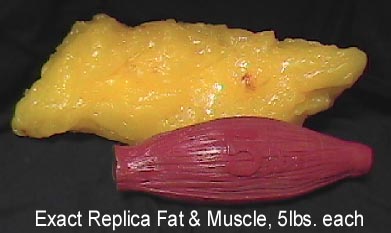
The thing is, when you see an overweight or obese person, what you are looking at is Fat or Excess Fat to be more specific. If you don’t understand, let me show you something
Here you see five pounds of Fat and Muscle. Maybe by just looking at this picture you understand my point. Fat takes a lot more space than Muscle. That’s why sometimes you can see two men with the same weight but with distinct size of clothes.
Again, the important indicator for us to measure our fitness level is going to be BFP (Body Fat Percentage). In other words, how much of our body is fat.
Now the Big Question… How do we measure our BFP?
To measure BFP we have the following options:
1) DEXA Scan: A big machine that uses small emissions of X-ray to give us our body composition. This is the most accurate method but is also the most expensive. A session to determine your BFP would cost around $300.
2) Hydrostatic Weighing: In this method you are submerged into a water tank and the machine will measure your body fat. The logic behind this method is that being bone and muscle denser than water, a body with substantial amounts of body fat will be lighter. Hydrostatic Weighing is accurate and not so expensive as Dexa Scan but is not as available.
3) Skin Fold Caliper: This is a very popular method in gyms but since the device is not expensive you can get your own. Results are as accurate as your measuring skills. The idea is to pinch the skin at certain spots and measure with the tool. After that you will check the values with a conversion table that will give you the resulting BFP.
4) Bioelectric Impedance Analysis: This is the method used by many Weight Scales. Using a small electric current flow and measuring the electrical impedance (resistance) on the body you can get a relatively accurate value of your BFP.
5) BMI (Body Mass Index): Well, this is not really a true method to measure BF, but in overweight and obese people it can sometimes be as accurate as the Bioelectric Impedance Analysis. The parameters needed for the formula are Height and Weight. Strangely enough, BMI is still the number one method for assessing body composition and there are scales that only have BMI.
Out of all five methods, we will be using 4 and 5.
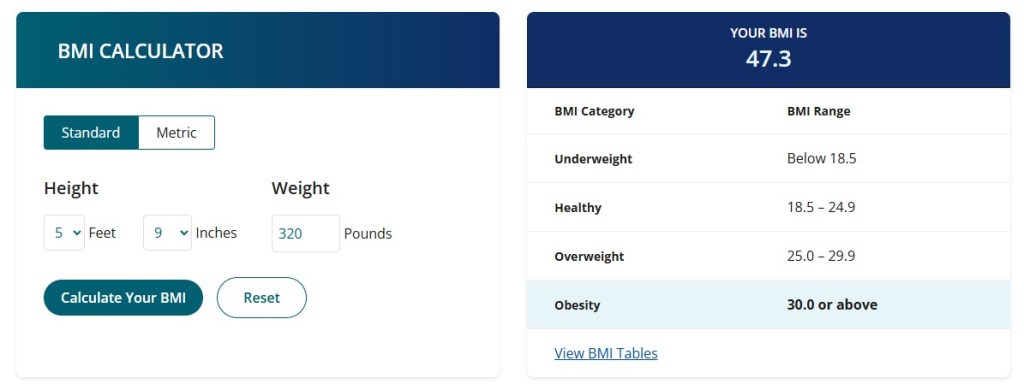
Now, to end today’s post, let’s get our BMI right now! I know that my current weight is 320 pounds and that I am 5′ 9″.
For our test, we will use a BMI calculator from The US Department of Health & Human Services
I went to the site, and using “Standard” System, I entered height and weight and clicked on “Calculate Your BMI”.
Well, there you have it folks! According to the resulting table, having a BMI above 30 will place you in the obese category. In my case, with a BMI of 47.3 that is way over plain obese. So just doing the effort to get out of this category will be a big task for me.
On our next post, we will learn how to use a Bioelectric Impedance Analysis Weight Scale and compare results.




 THE HETA BLOG