
Meet the enemy of every weight loss plan! Don’t be deceived by its sweetness

Every weight loss plan is built on its own set of rules and knowledge. Mine is no different, and I believe the Ketogenic Diet has shown enough evidence to prove it’s a solid step toward overcoming insulin resistance. As mentioned in our last post, insulin resistance is something we need to avoid at all costs, as it opens the door to many health problems.

Maybe you’re not following Keto and have your own plan that you trust will bring results. That’s totally fine! Here’s a bit of advice that can apply to any diet if you’re overweight or obese like I am.

CUT DOWN ON THE SUGARS!!!

Sugar is in almost everything we eat, and even if you don’t see “sugar” listed in the ingredients, it’s often hiding under other names like high-fructose corn syrup (HFCS), dextrose, sucrose, fructose, lactose, and more.

Now, don’t get me wrong. It’s not that our bodies can’t handle a normal amount of sugar; it’s actually a primary source of energy. But you likely consume more sugar than you need, and certainly more often than necessary.

Another thing to consider is the type of sugar. I mentioned high-fructose corn syrup (HFCS), and you’ll be doing yourself a big favor by avoiding it like the plague. Instead, get your daily dose from whole fruit (not juice), which comes with fiber to help prevent the glucose spikes we often get from liquid sugars like juices.

Try this experiment: write down everything you eat in a day, including snacks, and then use an app like “My Fitness Pal” to find out how many carbs, or what will be converted to sugar (glucose), you’re consuming. To do this, take the carbs value of each food, subtract the fiber, and you’ll get the Net Carbs. Then, add them up for your total for the day.

Let’s do an example:
A regular Peanut Butter Sandwich and a can of Coke.

Two slices of white bread:  25.3g – 1.2g = 24.1g
Two spoons of peanut butter = 7g
One can of Coca Cola = 39g

Our little snack means 70g of Carbs

This is about the maximum for any low-carb diet and roughly a third of a diet that doesn’t limit carb intake. My suggestion for this test? Skip the Coke and swap the white bread for a high-fiber option like German pumpernickel.

If you get into the habit of reading labels, you might realize you’re consuming more sugar than you think. Too much sugar can quickly lead to insulin resistance and, if left unchecked, type 2 diabetes. So, let’s get into minding the amount of carbs that we get into our body, as it is quite possible that you are having more than you need.

See you on our next post.
Insulin Resistance… You Got to Understand THIS!!

Dear Reader:

I’m not sure how far off your regular weight you might be. But if it’s a significant amount, and you’re dealing with a large abdomen while struggling to lose weight, it’s possible you could be experiencing something known as Insulin Resistance.

Ok, let’s begin with the standard definition.

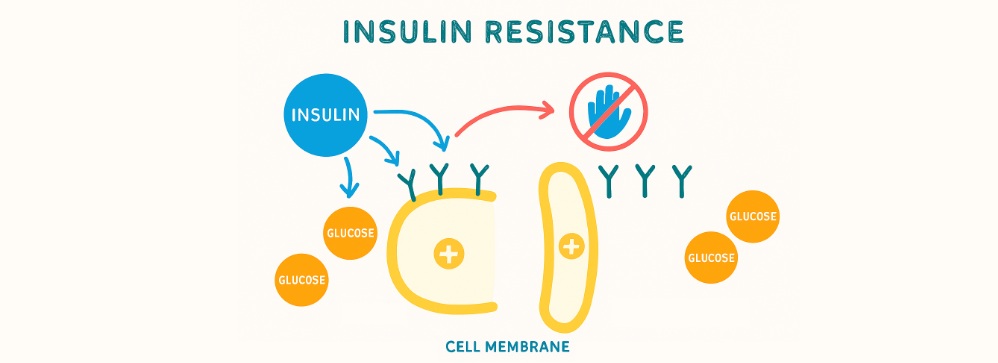
Insulin resistance (IR) is a pathological condition in which cells fail to respond normally to the hormone insulin.

The normal response of cells to insulin is quite simple: insulin allows cells to absorb glucose from the blood. In other words, insulin is the hormone that transports blood sugar, or glucose, from the bloodstream into the cells. Under normal conditions, the pancreas releases a specific amount of insulin, which helps deliver the glucose from your last meal to your cells—essentially feeding them.

In insulin resistance, the cells resist or reject the effects of insulin. This condition usually develops over many years due to excessive carbohydrate intake. To compensate, the pancreas produces more insulin to overcome the resistance, nourish the cells, and maintain normal blood sugar levels, which is a top priority for the body.

You might wonder: If my pancreas can handle insulin resistance, why should I be concerned about it?

This vicious cycle can’t continue indefinitely without leading to harmful consequences. Over time, your cells become more resistant, forcing your pancreas to produce more insulin to keep blood sugar levels normal. Eventually, your pancreas won’t be able to produce enough insulin to combat the resistance, and your blood sugar levels will begin to rise. At this point, maintaining normal blood sugar levels becomes much harder, and this condition is known as prediabetes.

You don’t need to be a genius to see where this is headed. Insulin resistance is essentially the precursor to Type 2 Diabetes. If you’ve ever wondered why the medical approach to treating Type 2 Diabetes often involves adding more insulin to your body (to support an overworked pancreas), now you know. Type 2 Diabetes is simply an advanced stage of insulin resistance.

Another important reason to avoid insulin resistance, especially if you’re trying to lose weight, is this: when insulin levels are high, the body won’t burn fat. Insulin is often referred to as “The Storage Hormone” for good reason. Glucose is either used by the body as fuel or stored as fat for future use.

In my recent blood test, my insulin levels were three times higher than the maximum normal range, but my blood glucose levels were normal. This happens because my pancreas is overworking, producing 300% more insulin to maintain normal blood sugar levels. If I don’t address this issue, I’ll likely end up with Type 2 Diabetes. Oh, and did I mention that losing fat is going to be incredibly difficult with my current insulin levels?

I’m confident you understand what insulin resistance is and the harm it can cause to your body. In the next post, we’ll discuss some steps you can take to address it.

Hint: Our diet helps combat this condition.

See you on the next post.

Ok, Let’s see what is out there…

encuesta

Some people think that selecting a diet is an easy task. And I believe it is, but when others decide for you. That is, in other words, you go to the doctor to get fix, sorry, to get fit.

If you want professional help on deciding what to use as a diet, I will recommend that you put yourself in the hands on a good “Dietitian”.  Please note that I said “Dietitian” and not “Nutritionist”.  The first one requires a bachelor’s degree in nutrition and dietetics while the later can be achieved without formal qualifications. Is not my intention to degrade nutritionists, as I know that many of them have some kind of degree in nutrition or related fields, is the lack of curriculum standardization that work against them.

Let me give you an example of what a dietitian would do in a hypothetic case:

Patience with a severe case of NAFLD (Non-Alcoholic Fatty Liver Disease) walks into our dietitian’s practice and asks for a diet to put him on the right track to lose weight.

Do you think that is a good idea that our dietitian includes fruits as part of the diet?
Why not? Fruits are a common denominator in just about every balanced diet and the fiber would be of great help to our patience.

Image result for Wrong Sign Transparent Background (imagine the Buzz sound of a wrong answer)

Fruits contains two types of sugar: fructose and sucrose.  sucrose can be broken down by just about any cell in our body. In contrast, fructose has to be managed by the liver exclusively. If our patience already has an impaired liver because of NAFLD, adding extra work with fructose process is not doing anyone a favor. Therefore, a dietitian would possibly wait to correct some degree of NAFLD before recommending fruits.

Do you understand?  Is not that I am saying that fruits are a bad choice for a healthy diet, only that it may not be the best choice for someone with a condition like NAFLD. And that is a kind of choice that a dietitian would do.

Let me end this post by saying that in my opinion diet is easily 75% part of the formula for health. Yes, I know, exercise is important too, but you simple cannot exercise out a bad diet, you simple can’t.  But don’t worry, we don’t plan to only go for the top tier option.  Exercise is also part of the solution.

Now let’s go to work!  You have a few days to search for diet options.  I will do the same and on the next post I will introduce my winner and maybe also the runner-up.

Until our next post and have a good time researching!

No matter the plan, get your doctor’s “Blessing”

bpbeingtaken

Let us imagine that you already arranged a good plan for eating healthy and also will add a few hours of light exercise during the week.  Great!!!
A fair question would be:
Why, do I need to visit my doctor if he or she would 100% approve what I am planning to do?

The answer (totally in your favor) is: Because a medical checkup can get you essential information that you should consider during your weight loss program.

Let’s say that you go to the doctor and tests reveal that your blood sugar is too high. Of course, your doctor won’t tell you to drop your plan but maybe add medical suggestions that could improve how efective and safe it executes. Maybe you will get a note to keep away for certain foods or monitor your glucose levels. The same goes for blood pressure and other parameters that have a profound impact on your health.

A couple of years ago, I went to the doctor for a case of torticollis and some of the tests revealed a condition in the cervical area of my spinal cord (neck area) that requires attention. Luckily enough, the doctor said that “Cervical Therapy” would suffice. But my point is that because of this finding, the doctor strongly suggested keeping away from high impact exercises, even if I could go back to a normal weight.  This was not a preventive checkup, and I got very important for any fitness plan that includes exercise. So, knowing where you stand before initiating is always a wise decision.

Work with your doctor and try to get a health picture of you as wide as possible. The more information the better. I believe that your “Before” checkup should include but not limited to: 

1) Complete “Lipids Profile” (your Cholesterol numbers).  Please tell your doctor to include the not always present, genetic marker Apo (a) and the modernly used risk indicator Apo B.  
2)  Glucose Tests (your blood sugar numbers).  This is usually measuring your glucose level at the time of the test, but how about asking for an “A1C” test that is a better assessment for glucose healthy levels? and while you are at it, let us get a “Fasting Insulin” Test.  I am sure that your doctor won’t complain getting this additional knowledge. 
3) Liver Test is also mandatory when assessing metabolic health. If you are obese like me or even overweigh, there is the possibility of having some degree of NAFLD (Non-Alcoholic Fatty Liver Disease) aka Fat in your Liver. 

So go ahead! Get your doctor involved and start your journey knowing important things about your current self and that you have the approval of your medical professional for your journey to a healthier You!